
THE UNSEEN – ECHOES IN PARIS
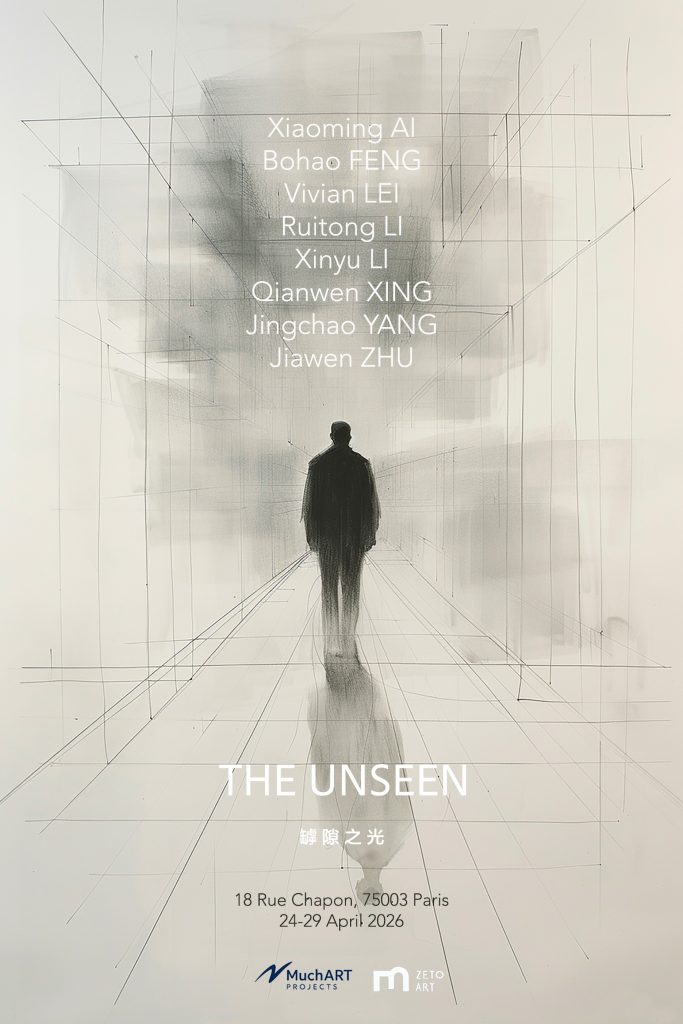
L’Invisible — Échos à Paris
Ce qui est invisible n’est pas inexistant.
在光影交织的巴黎,人们习惯于凝视宏大的地标与繁华的表象,却往往遗忘了那些栖息在“可见”与“不可见”缝隙之中的真实。
本次展览是一场关于“感知力”的深度实验。我们聚焦于城市喧嚣下被掩盖的微弱震动,巷弄转角处消散的低语,历史遗留下的隐形刻痕,以及那些身处人群之中,却被社会视线悄然“自动过滤”的灵魂。有些故事从未被书写,有些情绪尚未被命名,然而,在这些“缺席的存在”中,它们并未消失,而是以回声的形式,以另一种形式在沉默中回响。
Ce qui est invisible n’est pas inexistant —— 看不见,并不代表不存在。
当事物不再以具体明确的形式呈现时,我们反而能穿透表象,透过记忆、直觉与身心感受,去触碰那层更深邃的温度,触及一层更深更隐秘的真实。我们邀请你放慢脚步,去聆听那些未被听见的,去靠近那些尚未被定义的“不可见”。
或许巴黎最真实的脉搏,正跳动在那些被忽视的缝隙之中。
存在本身,从不需要被看见才能证明。
L’Invisible — Echoes in Paris
Ce qui est invisible n’est pas inexistant.
In a Paris woven from light and shadow, attention is often drawn to monumental landmarks and surfaces of splendour. Yet what inhabits the interstices between the visible and the unseen is quietly overlooked.
This exhibition unfolds as an exploration of perception. It turns towards the subtle tremors concealed beneath the noise of the city—the whispers that dissipate at street corners, the invisible imprints left by history, and the presences that move among us yet are unconsciously filtered out by the social gaze. Some stories are never written; some emotions remain unnamed. And yet, within these “absent presences,” nothing truly disappears. Instead, they persist as echoes, resonating in silence, taking on other forms.
Ce qui est invisible n’est pas inexistant — what is unseen does not cease to exist.
When things no longer present themselves in fixed or legible forms, we are invited to move beyond appearances. Through memory, intuition, and embodied sensation, we begin to approach a deeper temperature of reality—something more subtle, more concealed, yet profoundly present. We invite you to slow down, to listen to what has not been heard, and to draw closer to that which has yet to be defined.
Perhaps the truest pulse of Paris beats precisely within these overlooked intervals.
Existence itself does not require visibility to be proven.
展览画册|Exhibition Brochure
参展艺术家|Participating Artists
艾晓明|Xiaoming Ai
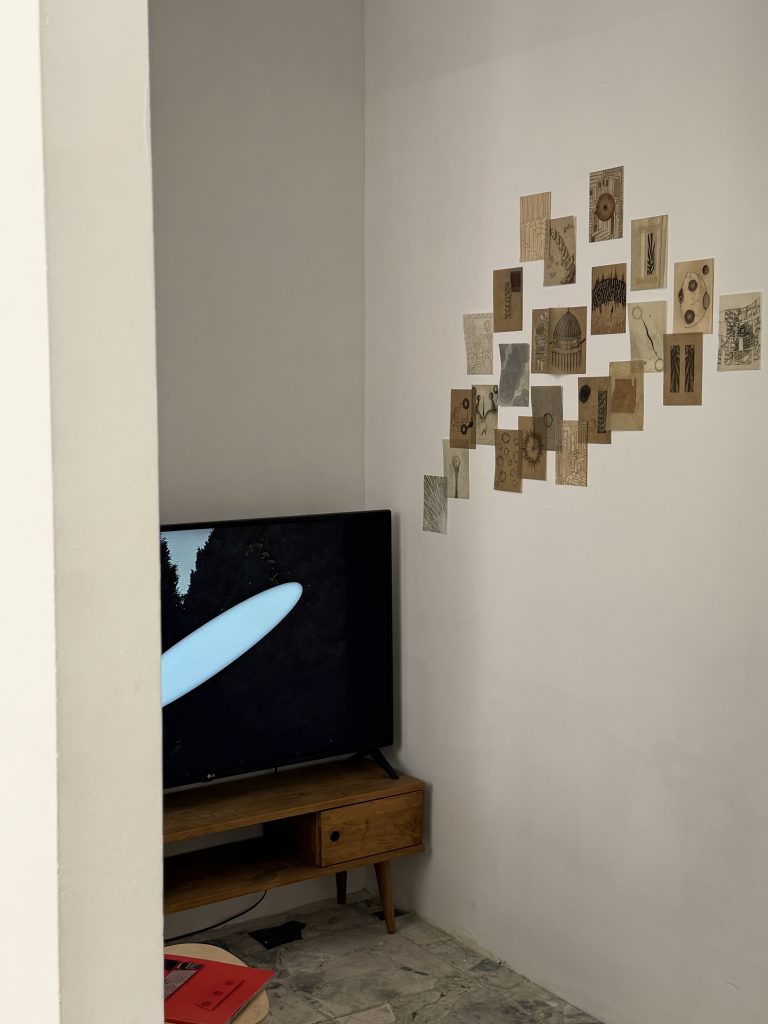
旋行 | In the Turning
唐卡画布水墨 |Ink on Thangka canvas
About 艾晓明|Xiaoming Ai
艾晓明擅长唐卡艺术,同时也具备丰富的编程经验与能力。她目前的艺术实践主要聚焦于互动式唐卡艺术,并致力于在当代艺术语境中,对唐卡的视觉语言与象征系统进行重新诠释与再创造。
Xiaoming Ai skilled in Thangka art, she also has extensive experience and capability in programming. Her current artistic practice mainly focuses on interactive Thangka art, and reinterpreting and re-creating the visual and symbolic language of Thangka within a contemporary art context.
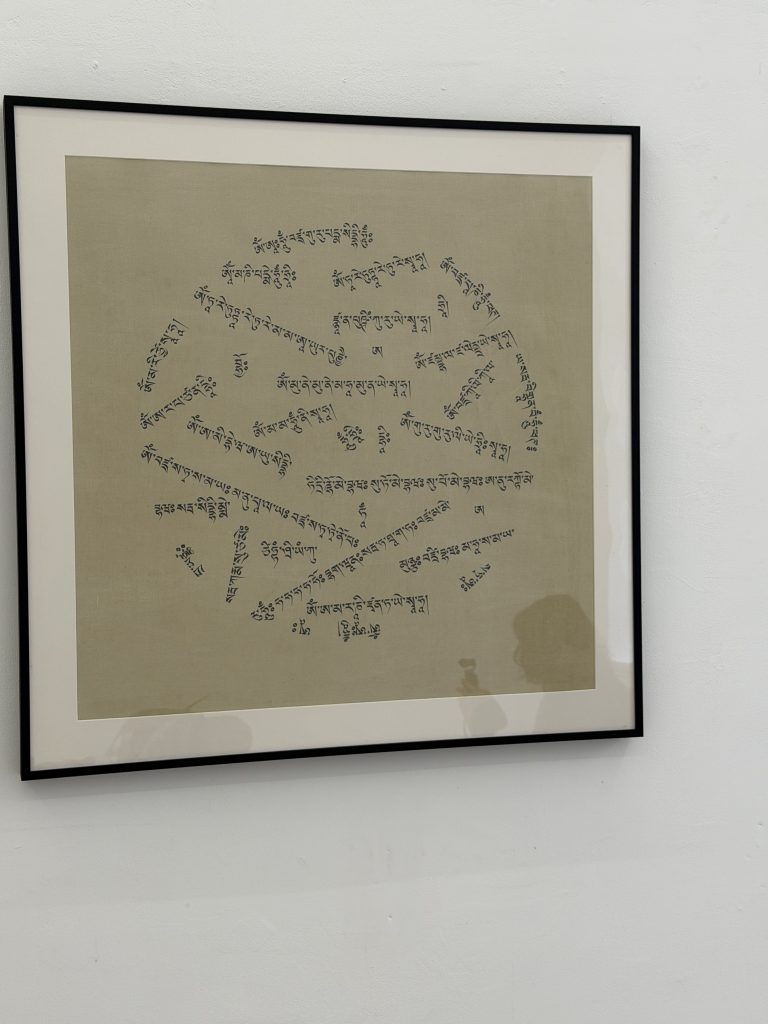
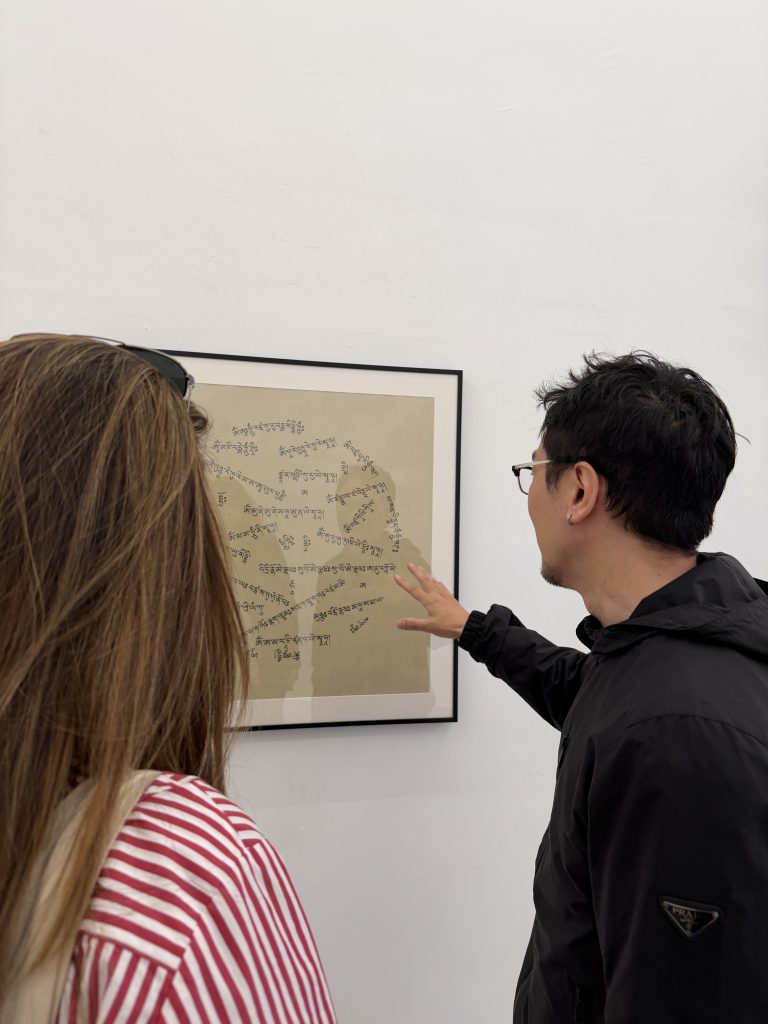
流动的环形轨迹体现了一种无始无终的时间模型。通过持续不断的旋转与重叠,它消解了中心与边缘之间的界限,使语言从承载意义的容器,转化为一个不断生成的能量场。
形式的持续回返与消散,使个体经验在重复之中逐渐淡去。
The flowing circular trace embodies a model of time without beginning or end. Through perpetual rotation and overlapping, its dissolutions the boundaries between centre and edge, as language evolves from a vessel of meaning into a field of energy in constant generation.
The continuous return and dissolution of form cause individual experience to fade within repetition.
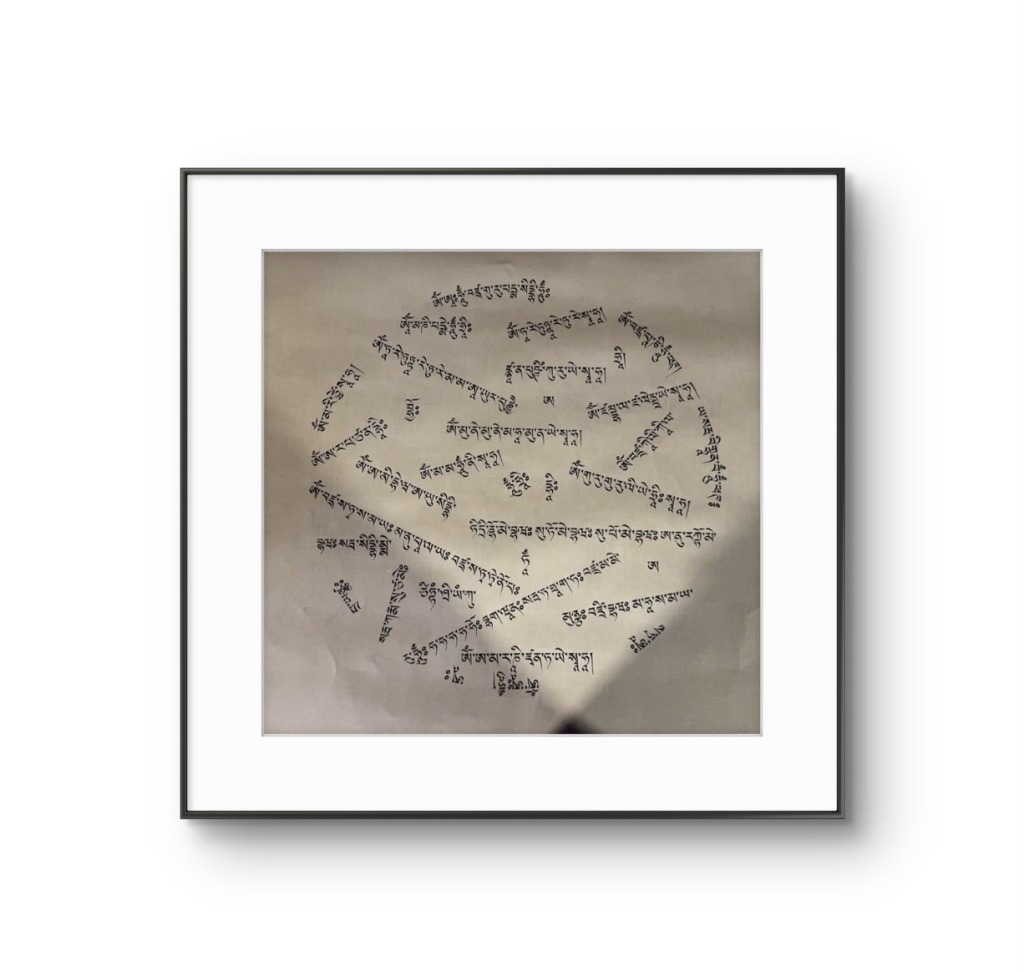
Xiaoming Ai
Ink on Thangka canvas
75 × 75cm (framed)
2025
冯博昊|BOHAO FENG
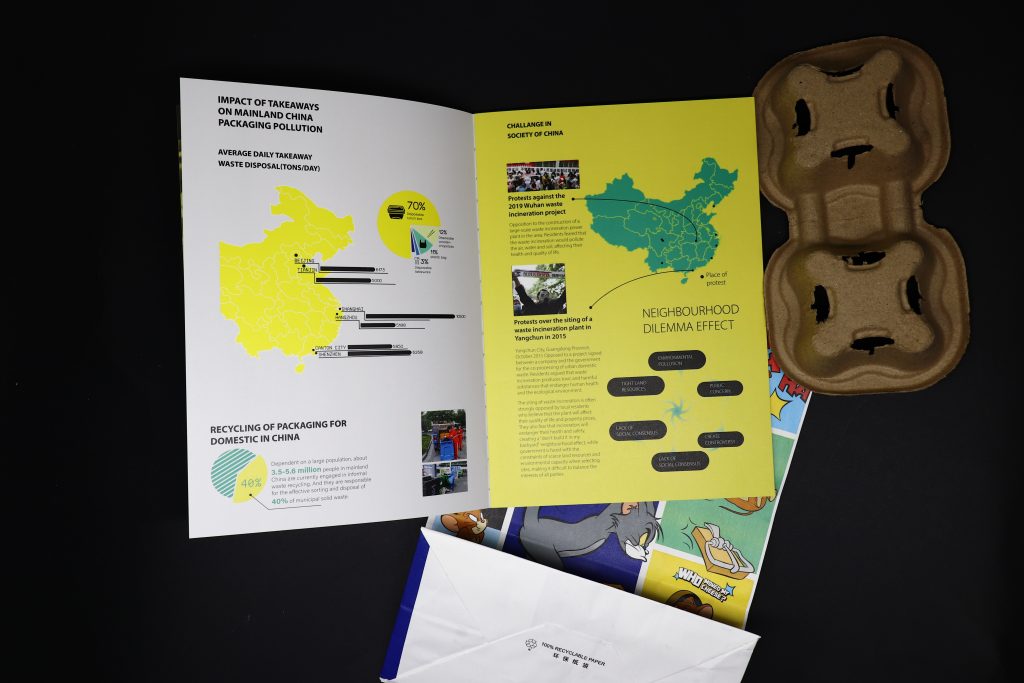
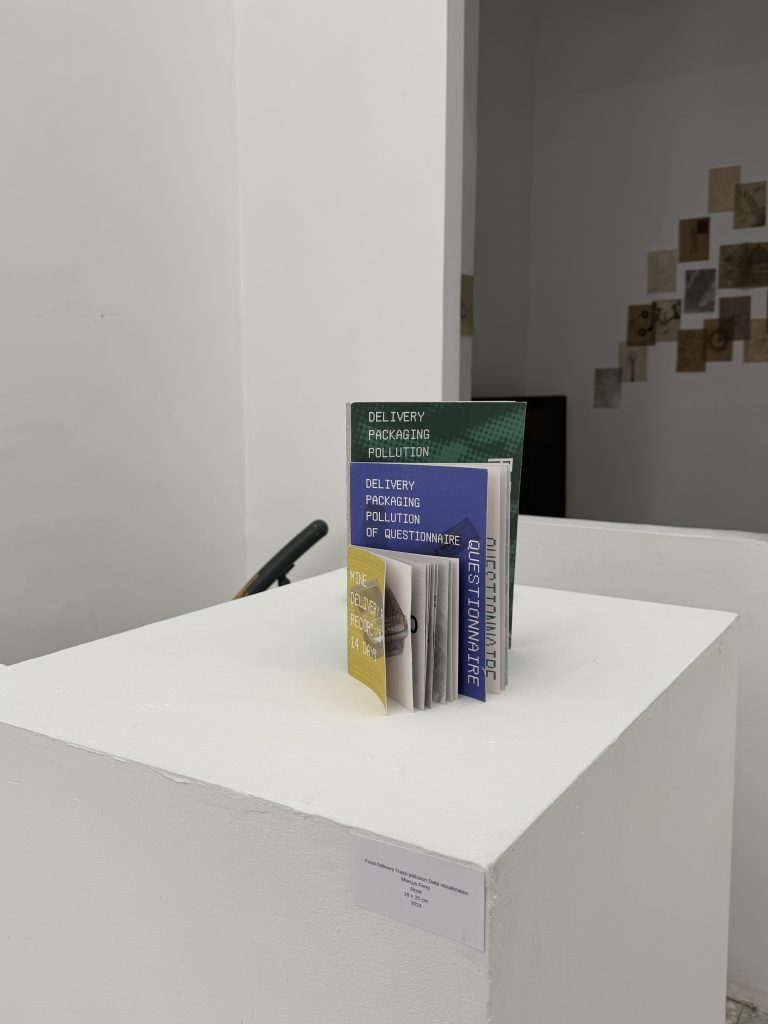
外卖包装污染数据可视化设计 |
Food Delivery Trash pollution
Data visualization
书籍设计|Book Design
About 冯博昊|BOHAO FENG
冯博昊是一位常驻伦敦的视觉与数据可视化设计师,工作横跨平面设计、数据可视化与出版设计领域。他的实践聚焦于构建以研究为导向的视觉系统,以回应社会议题。他的作品通过数据驱动的叙事,探讨健康、消费与集体经验等主题。近期项目关注外卖包装污染,将系统性增长与个体行为联系起来,揭示日常消费背后被隐藏的影响。其创作连接东西方视角,将数据分析与视觉叙事相结合,以反思当代社会中的文化与情感维度。
Marcus Feng (Bohao Feng) is a London-based visual and data visualisation designer working across graphic design, data visualisation, and publication. His practice focuses on building research-led visual systems to engage with social issues. His work explores themes of health, consumption, and collective experience through data-driven narratives. Recent projects investigate takeaway packaging pollution, connecting systemic growth with individual behaviour to reveal the hidden impacts of everyday consumption. Bridging Eastern and Western perspectives, his practice combines data analysis with visual storytelling to reflect on the cultural and emotional dimensions of contemporary society.
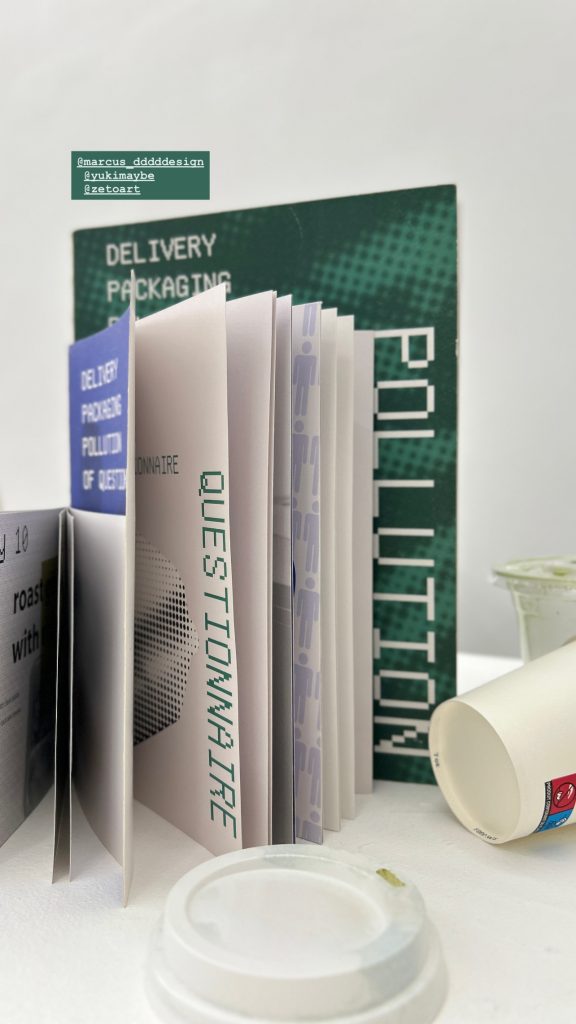
外卖包装废弃物污染,主要由外卖消费过程中产生的食物浪费与包装浪费所驱动,自新冠疫情以来进一步加剧。随着封锁措施推动移动端点餐迅速增长,外卖服务的广泛使用显著加重了环境污染,并引发了相关的健康担忧。尤其是过度包装——表现为层层包裹、不必要的空隙、高材料成本以及不恰当的材质选择——已成为这一问题的重要成因。
通过将视角转向日常个体消费,本项目考察了废弃物如何被生产、感知并逐渐内化,从而揭示其对行为方式与材料选择所产生的影响。这些不同层面的观察共同构成了一条批判性的叙事线索,将消费社会中的系统结构、公众认知与个体生活经验连接起来。
本项目以多层次、数据驱动的方式探讨外卖包装污染问题。通过分析社会、区域与环境数据,它揭示了外卖消费快速增长与污染不断加剧之间的关联。同时,它也指出了一个关键悖论:尽管公众对此议题的认知普遍较高,但无论在政府层面还是社会层面,这一问题仍未得到充分应对。
Food delivery package waste pollution, driven by food and packaging waste from takeaway consumption, has intensified since the COVID-19 pandemic. As lockdowns accelerated mobile food ordering, the widespread use of takeaway services significantly increased environmental pollution and raised related health concerns. In particular, excessive packaging—characterised by multiple layers, unnecessary empty space, high material costs, and inappropriate material choices—has become a major contributor to this issue.
By shifting focus to everyday individual consumption, the project examines how waste is produced, perceived, and internalised, uncovering its impact on behaviour and material choices. Together, these perspectives form a critical narrative connecting systems, awareness, and lived experience within a consumption-driven society.
This project explores Food delivery packaging pollution through a multi-layered, data-driven approach. By analysing social, regional, and environmental data, it reveals the link between the rapid growth of takeaway consumption and escalating pollution. It also highlights a key paradox: while public awareness is generally high, the issue remains insufficiently addressed at both governmental and societal levels.
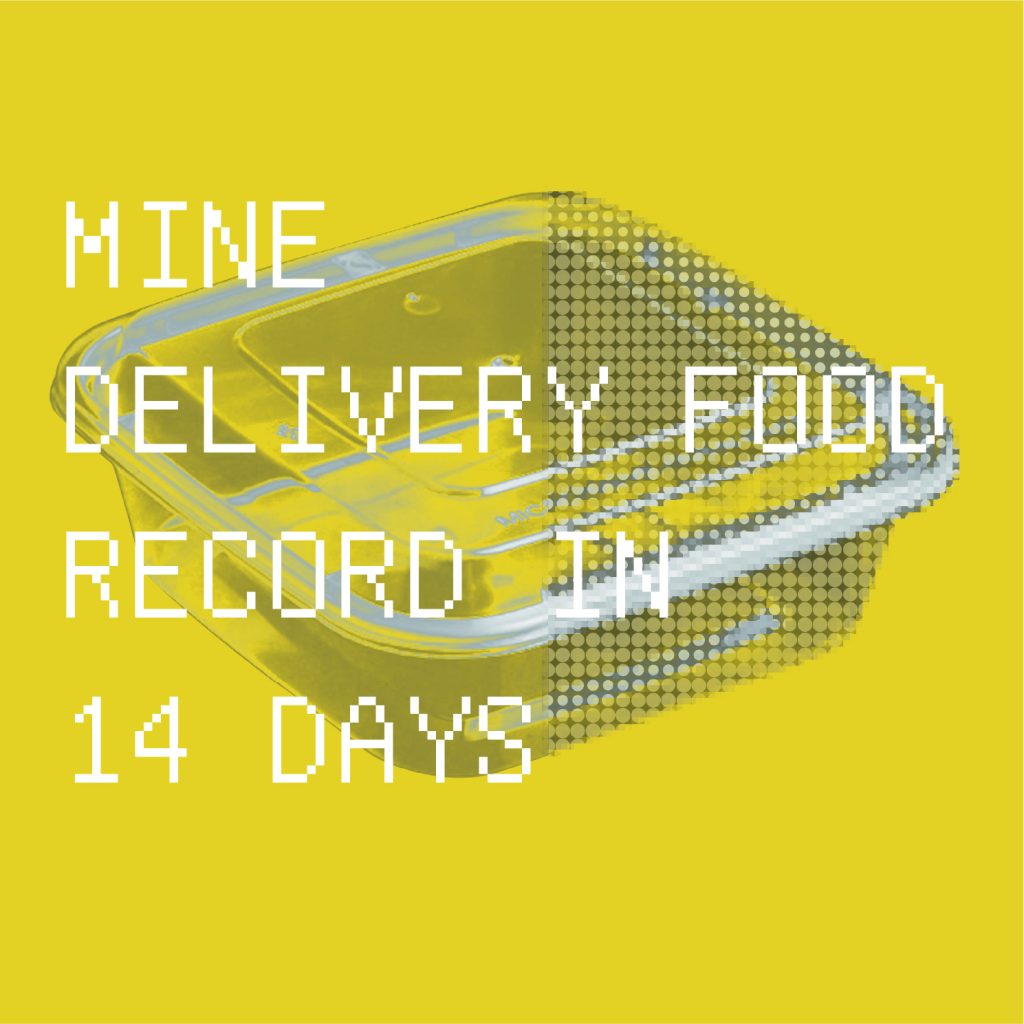
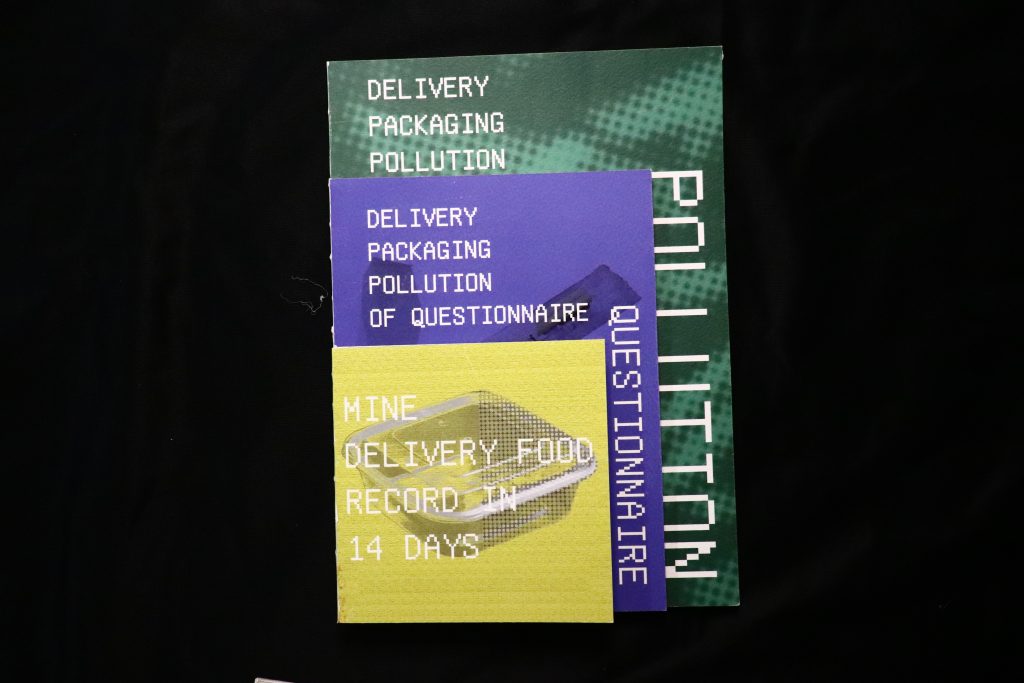
Bohao(Marcus) Feng
Book
18 × 25 cm
2024
李雯慧|VIVIAN LEI
拼凑家乡的记忆 | Reconstructing my
hometown’s memories
装置艺术|Sculpture
About 李雯慧|Vivian Lei
李雯慧(Vivian Lei),2002年生于澳门,是一位专注于综合材料与纺织创作的青年艺术家。她本科毕业于北京服装学院,现于伦敦皇家艺术学院继续深造纺织设计。
Lei Manwai (Vivian Lei),A young artist from Macau, China (born in 2002) specializing in mixed media and textile creation. She graduated from Beijing Institute of Fashion Technology with a bachelor’s degree and is currently pursuing further studies in textile design at the Royal College of Art in London
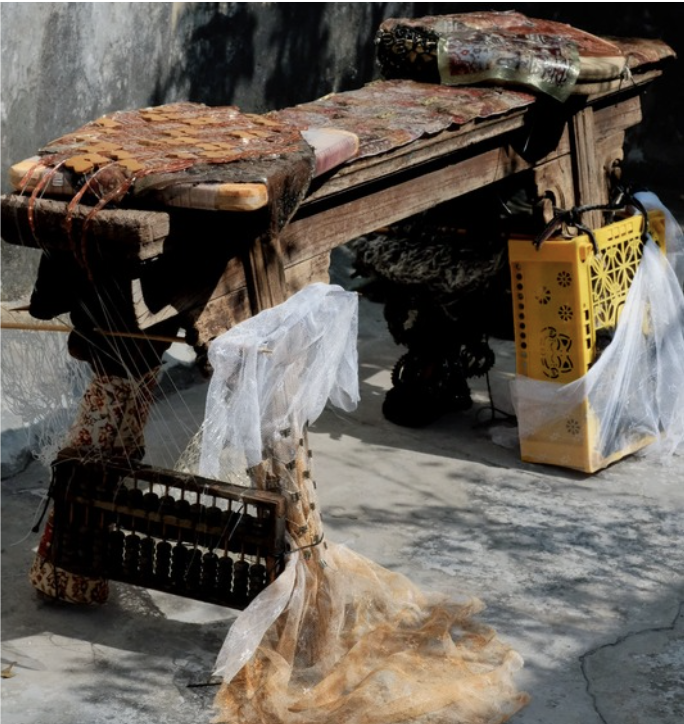
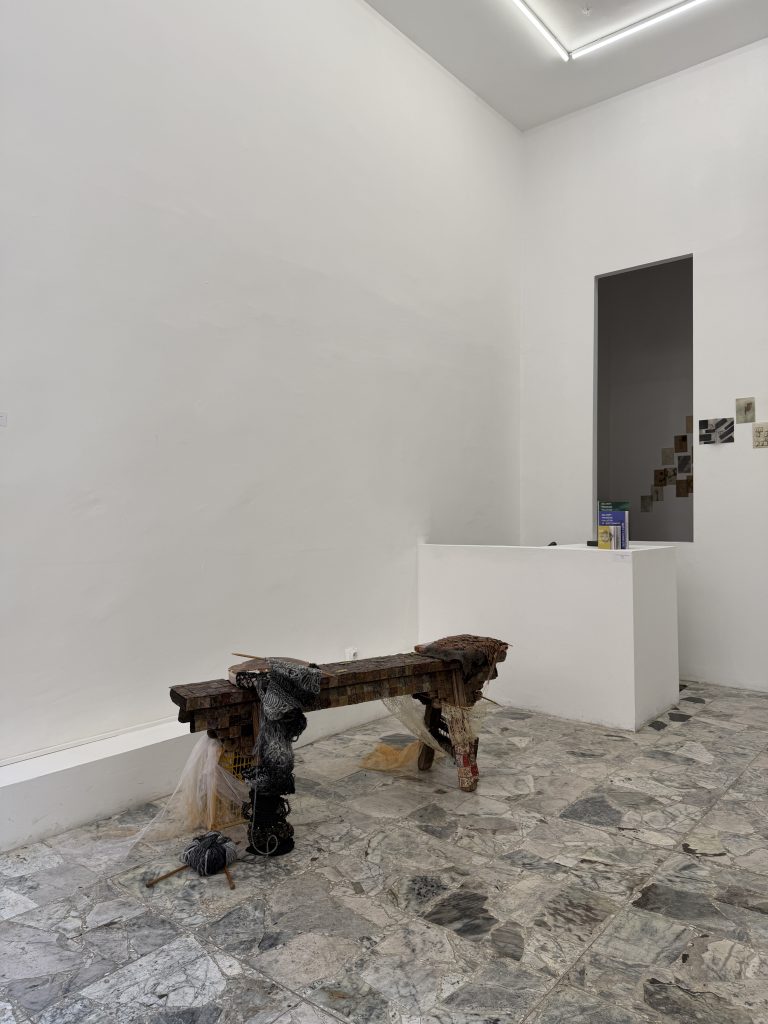
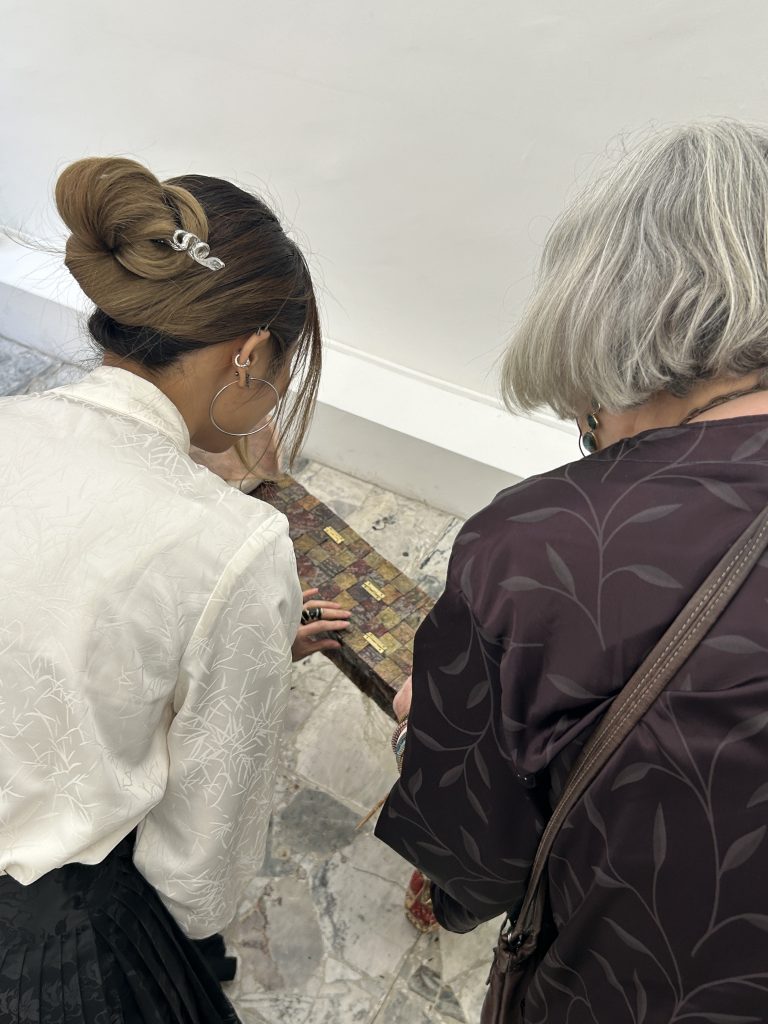
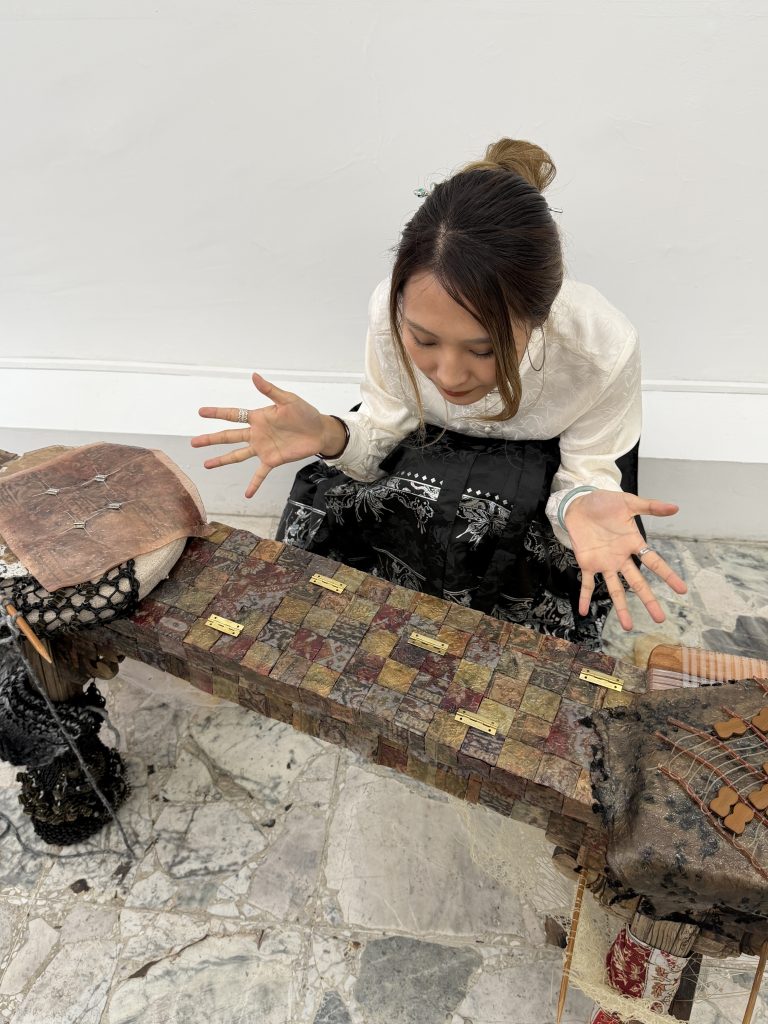
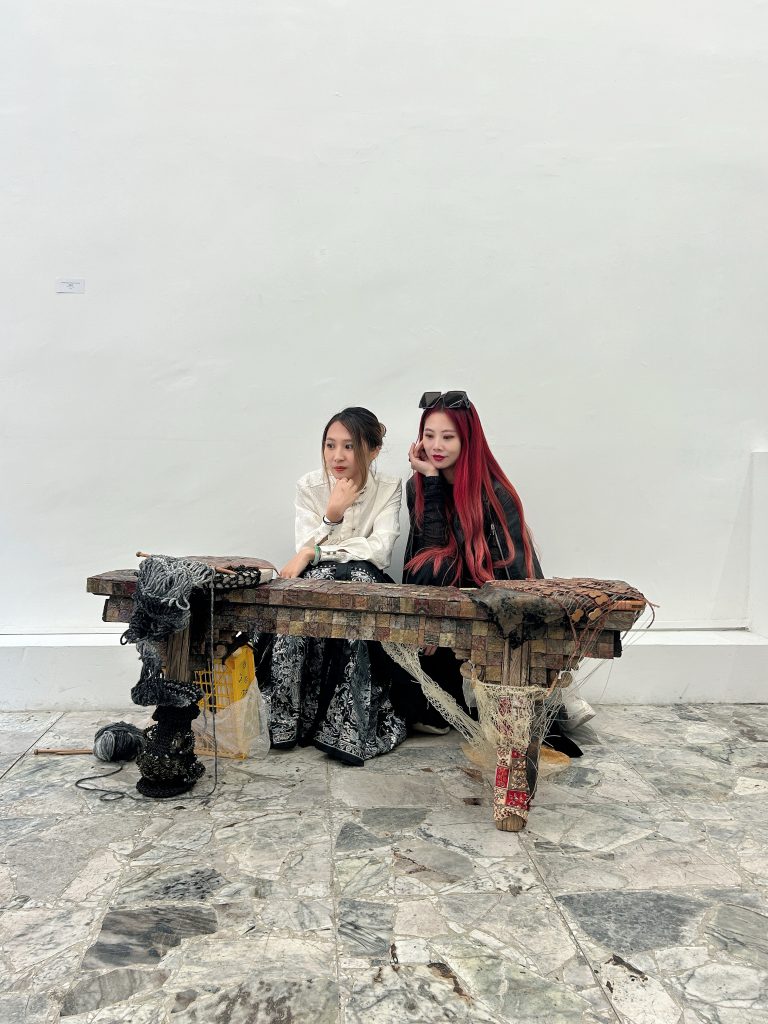
当盾构机穿凿中山的老街时,骑楼的木梁在尘雾中断裂。我注视着这座城市的表皮被一层层剥离:砖纹、花窗,以及街巷生活的喧响——这些曾被视为“落后”的事物,正被平整的柏油路和玻璃幕墙所吞没。这张长椅,是我为城市被遗忘的角落编织的一具身体。
它的骨架取自拆解下来的旧木,外覆一层由废弃地毯与凝胶蜡融合而成的肌理。
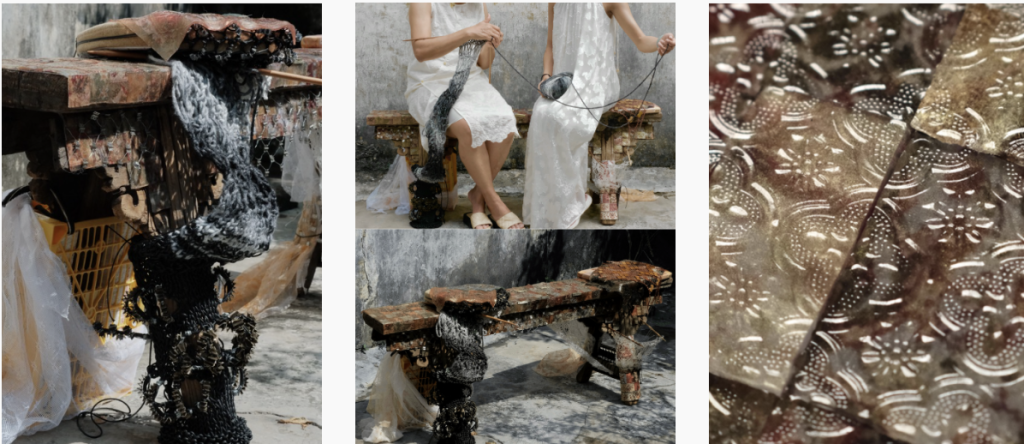
我将广东立体花窗的纹样压印于其表面,让那些褪色的图案在半透明的蜡中重新呼吸,仿佛是被封存于时间中的城市指纹。长椅的腿部是由尖锐金属刺与蜡线交缠而成的结晶体——工业的坚硬在编织中逐渐软化,最终渗入蓬松的羊毛:这既象征着工业化对乡村的侵入,也象征着记忆对创伤的温柔包裹。羊毛从金属的荆棘中生长出来,仿佛一只从废墟中伸出的手,试图抓住一丝正在消逝的温度。
在影像中,母亲的织针在光影间穿梭,一团灰黑色的毛线从她指尖垂落,如同一条连接过去与现在的脐带。我坐在她身旁,接过她手中的线——从笨拙的打结到流畅的针脚,我们的动作承载着两代人对“旧物”的执念:她编织家的温度,我编织城市的痕迹。当我最终坐上她的位置,织针的节奏与城市施工的轰鸣形成对位。
原来,对抗遗忘最坚韧的方式,从来不是执着于废墟,而是让记忆在代际的指尖之间流动,让旧有的肌理在新的编织中继续生长。
As tunnel boring machines carve through Zhongshan’s old streets, the wooden beams of the arcades snap amid dust and mist. I watch as the city’s skin is peeled away layer by layer: brick patterns, floral window grilles, and the hum of street life—once dismissed as “backward”—are being smothered under smooth asphalt and glass curtain walls. This bench is a body I have woven for the city’s forgotten corners. Its skeleton is hewn from dismantled old wood, cloaked in a texture fused from discarded carpet and gel wax. I have pressed Guangdong’s three-dimensional floral window tracery into its surface, letting faded patterns breathe within the translucent wax, like city fingerprints sealed in time. The bench legs are crystalline tangles of sharp metal spikes and wax thread—industrial rigidity softens gradually in the weave, finally bleeding into fluffy wool: an incursion of industrialization into the countryside, and a gentle wrapping of memory around trauma. The wool grows from the thorns of metal, like a hand reaching out from the ruins to clutch a fading warmth.
In the video, my mother’s knitting needles move through light and shadow, and a skein of gray-black yarn falls from her fingertips, an umbilical cord linking past and present. I sit beside her, taking up the yarn—from clumsy knots to fluid stitches, our movements hold two generations’ obsession with “the old”: she weaves the warmth of home, I weave the traces of the city. When I finally take her place, the rhythm of the needles counterpoints the roar of urban construction.
It turns out that the sturdiest resistance to forgetting is never clinging to ruins, but letting memory flow between intergenerational fingertips, and letting old textures continue to grow within new weaves.
Vivian Lei
Sculpture
135 × 49 × 25 cm
2024
李瑞彤|RUITONG LI
流动边界|Fluid Boundaries
影像|Photography
About 李瑞彤|RUITONG LI
李瑞彤,2002年出生,现居伦敦,是一位中国新锐艺术家,专注于综合材料与纺织创作。她本科毕业于南安普顿大学服装设计专业,现于皇家艺术学院攻读纺织专业硕士学位。
Born in 2002 and currently based in London, Ruitong Li is a Chinese emerging artist specializing in mixed media and textile creation. She holds a BA in Fashion Design from the University of Southampton and is currently pursuing her MA in Textiles at the Royal College of Art.
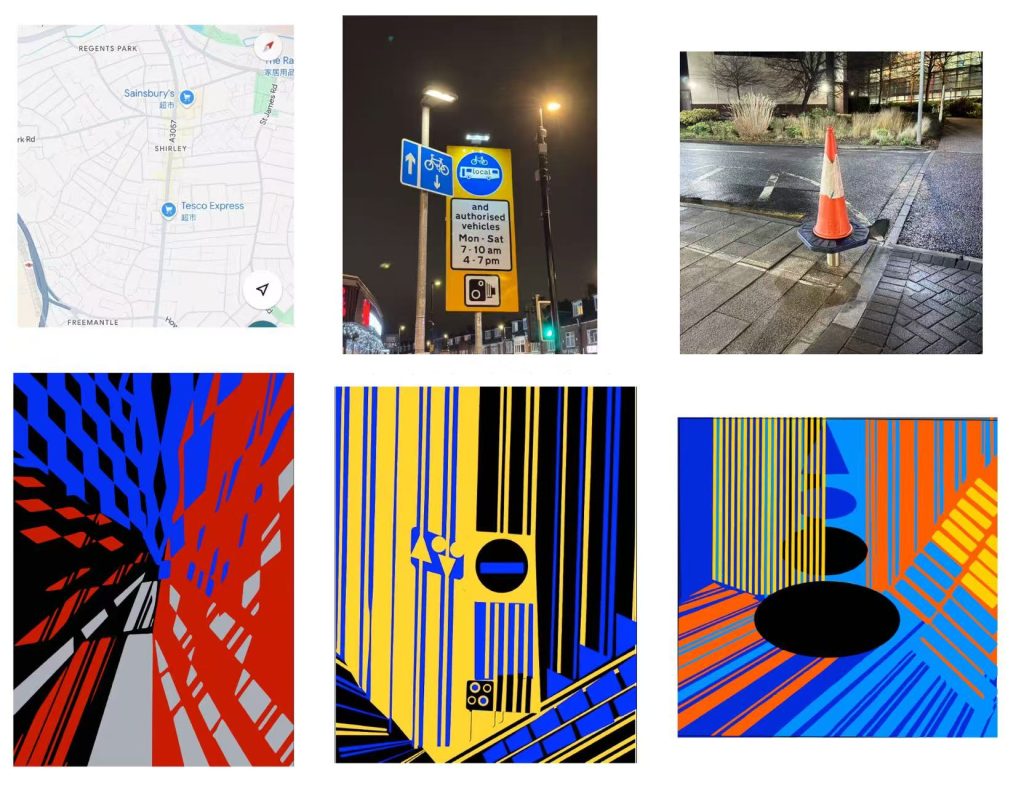
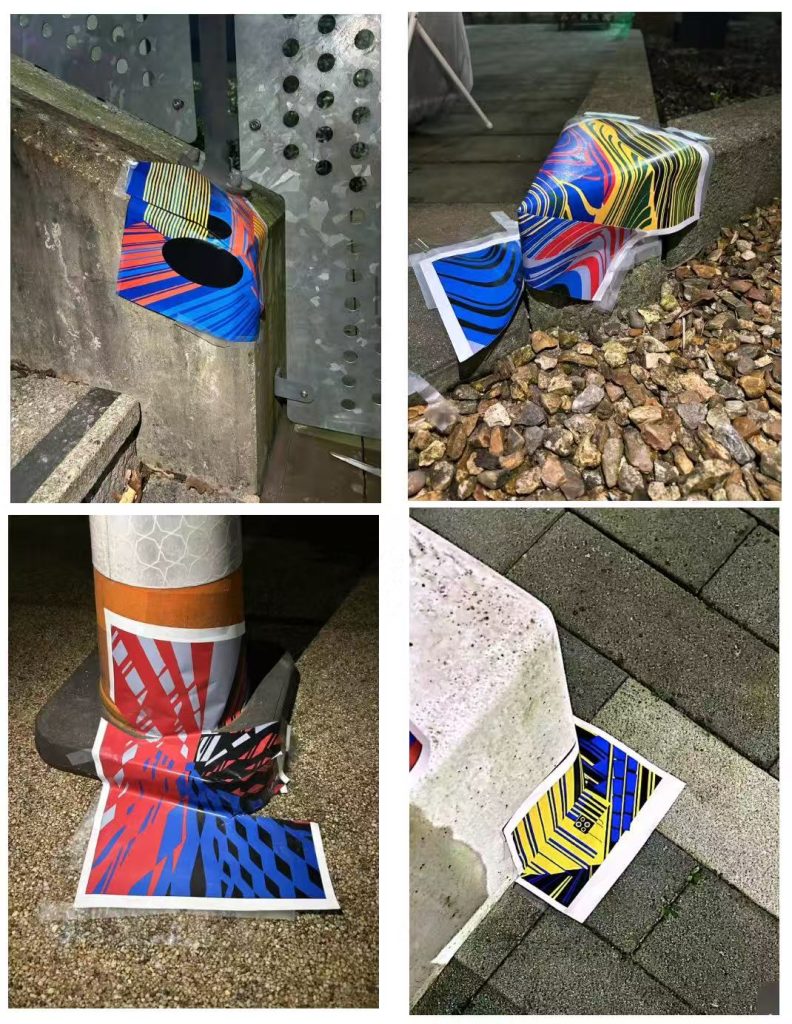
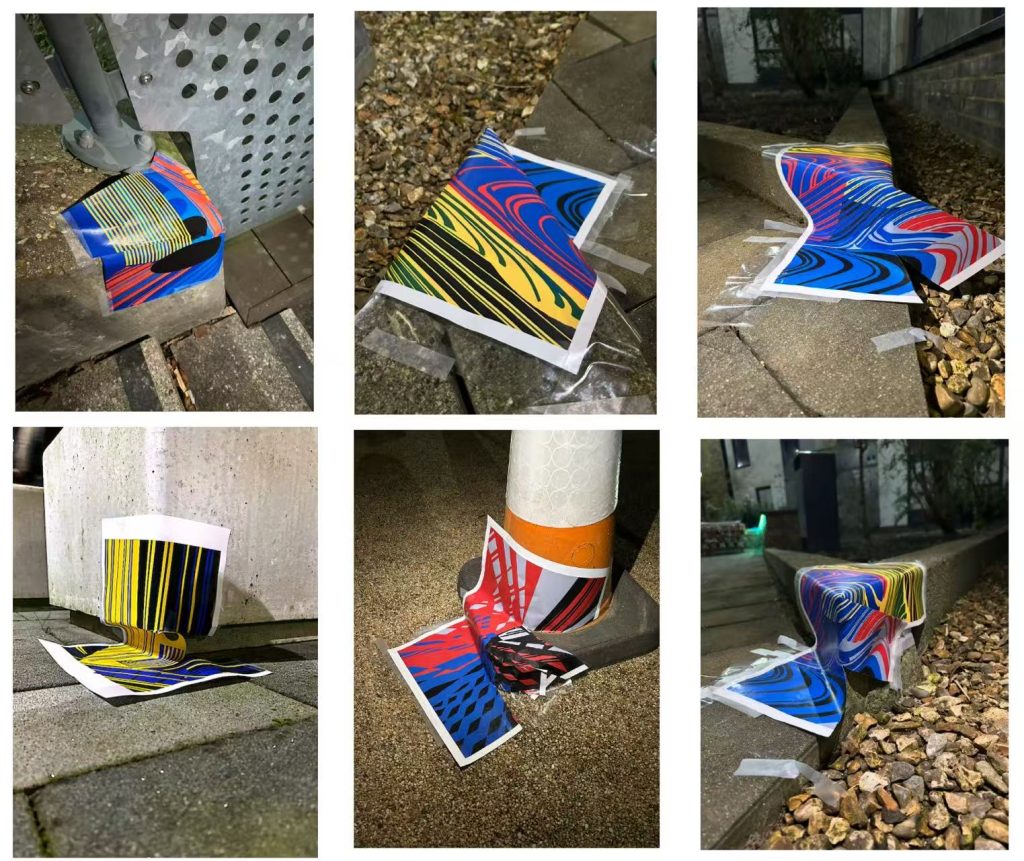
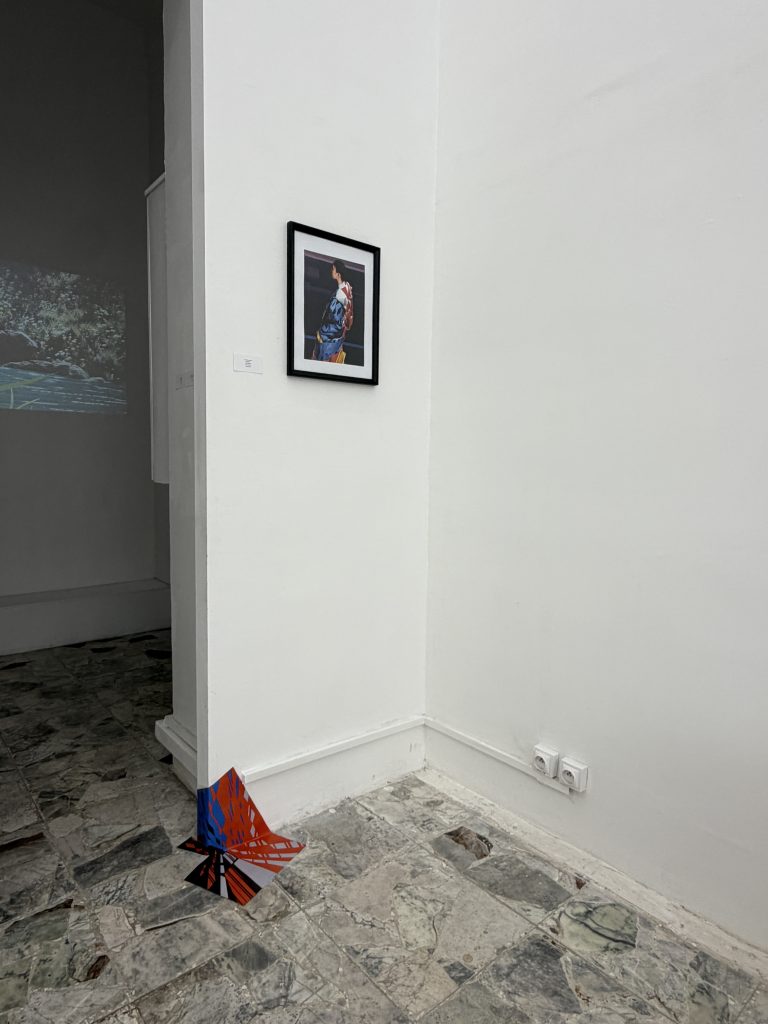
我的创作探索的是那些存在于自然环境与人造环境之中的“无形边界”。这些边界并不总是以可见的物理形式出现,却持续不断地规范着人们如何穿行、感知并体验空间。
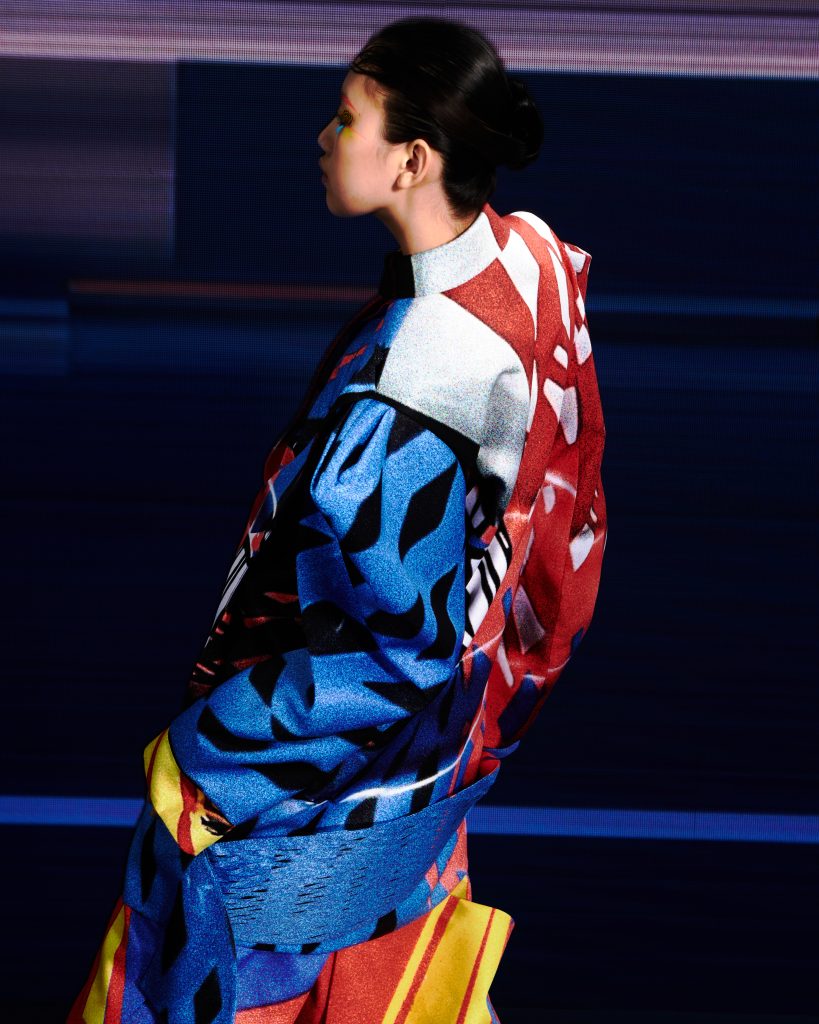
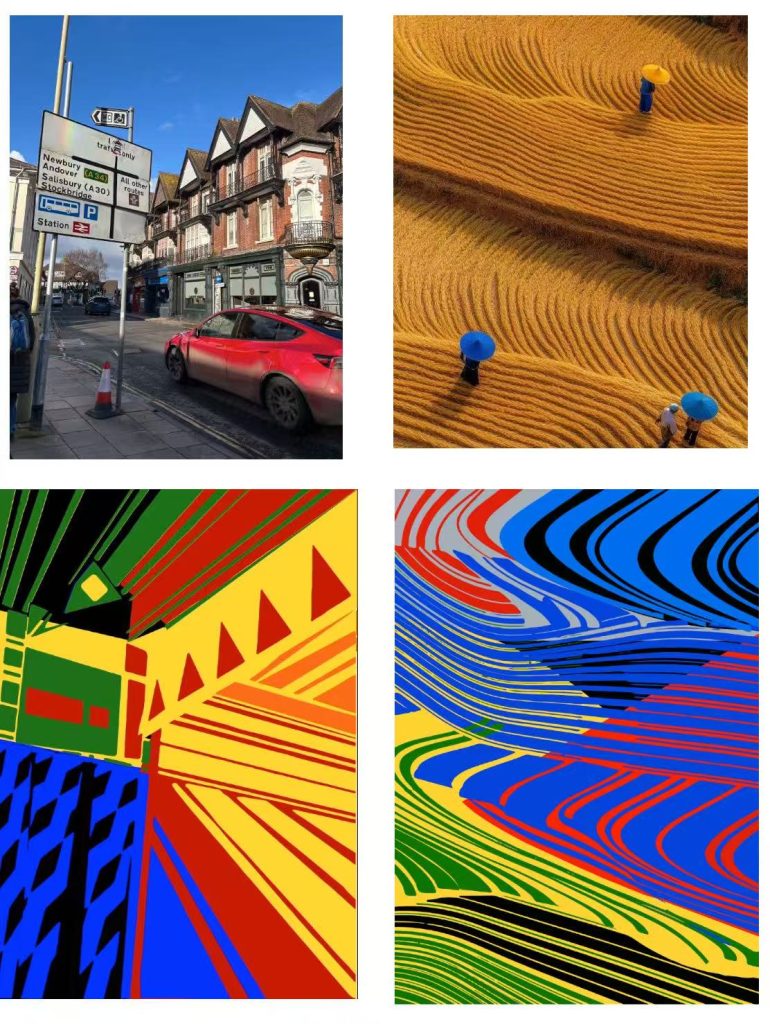
我从有机地貌与人工系统之间的对比中汲取灵感——例如稻田中自然流动的纹理,与交通标识、道路护栏等城市系统中僵硬的线性秩序——并由此发展出一系列线性图案,用以呈现自然生成与人为干预之间的张力。
这些形状不仅仅是视觉元素,也承载着控制、记忆与空间分隔的痕迹。即使它们逐渐隐入背景,甚至变得难以察觉,其影响依然持续存在——以微妙却有力的方式引导身体、组织移动,并塑造行为。
从这个意义上说,这件作品所反思的是一种并不总能被看见、却能被深刻感知的边界。它们存在于可见与不可见之间的缝隙之中,像回声而非实体,提醒我们:缺席并不等于不存在。
My work explores the presence of invisible boundaries thatoperate within both natural and constructed environments. These boundaries are not alwaysphysically apparent, yet they
continuously regulate how space is navigated, perceived, andexperienced.
Drawing from the contrast between organic terrains—such asthe flowing grooves of rice fields—and rigid urban systems like traffic signs and roadbarriers, I developed a series of linear patterns that embody the tension between naturalformation and human intervention.
These shapes function not only as visual elements, but astraces of control, memory, and spatial division. Even when they fade into the background orbecome imperceptible, their influence persists—guiding bodies, structuring movement,and shaping behavior in subtle yet powerful ways.
In this sense, the work reflects on boundaries that are notalways seen, but deeply felt. They exist in the gaps between visibility and invisibility, as echoesrather than objects—reminding us that absence does not equate to non-existence.
Ruitong Li
29.7 × 42 cm
Photography
2024-2025
李昕瑜|XINYU LI
进士|Jinshi
影像、插画|Video, Illustration
About 李昕瑜|XINYU LI
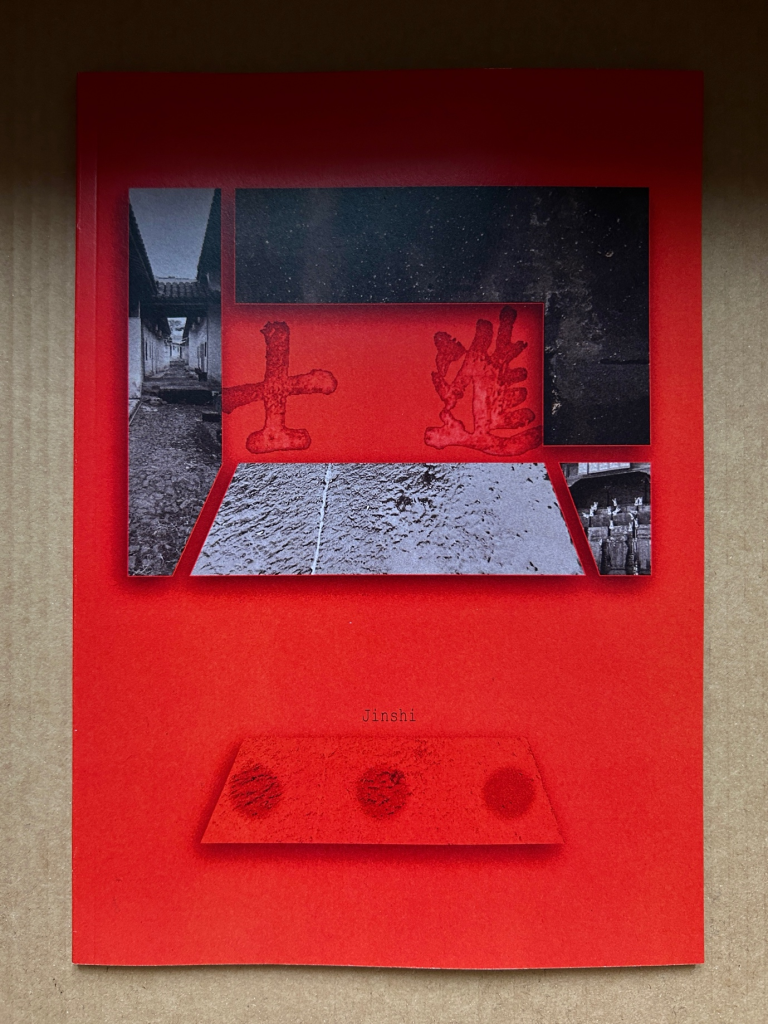
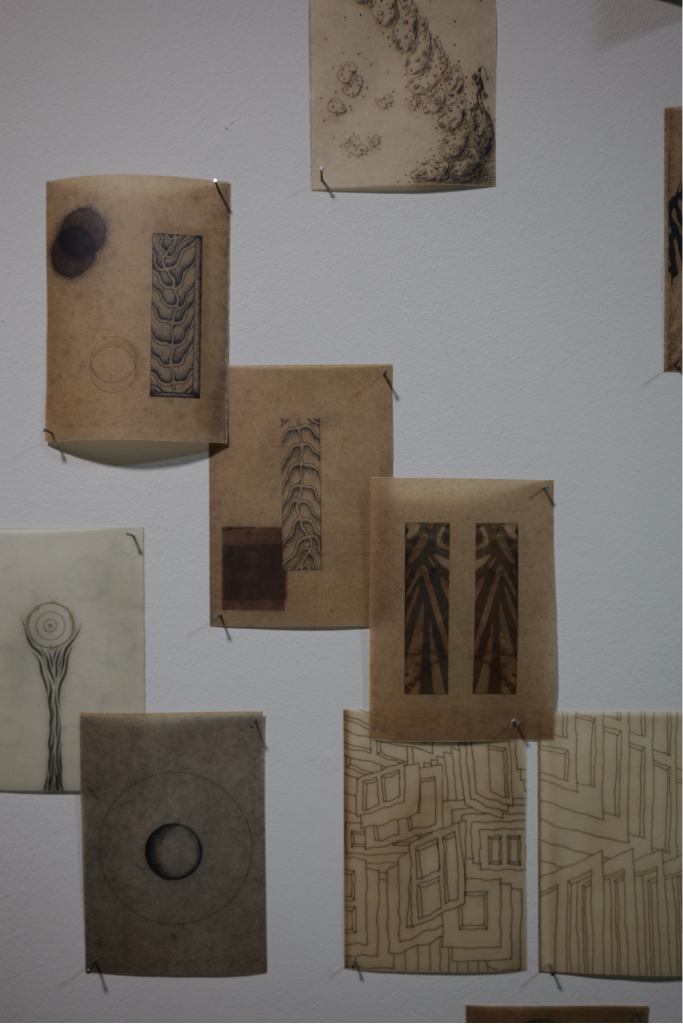
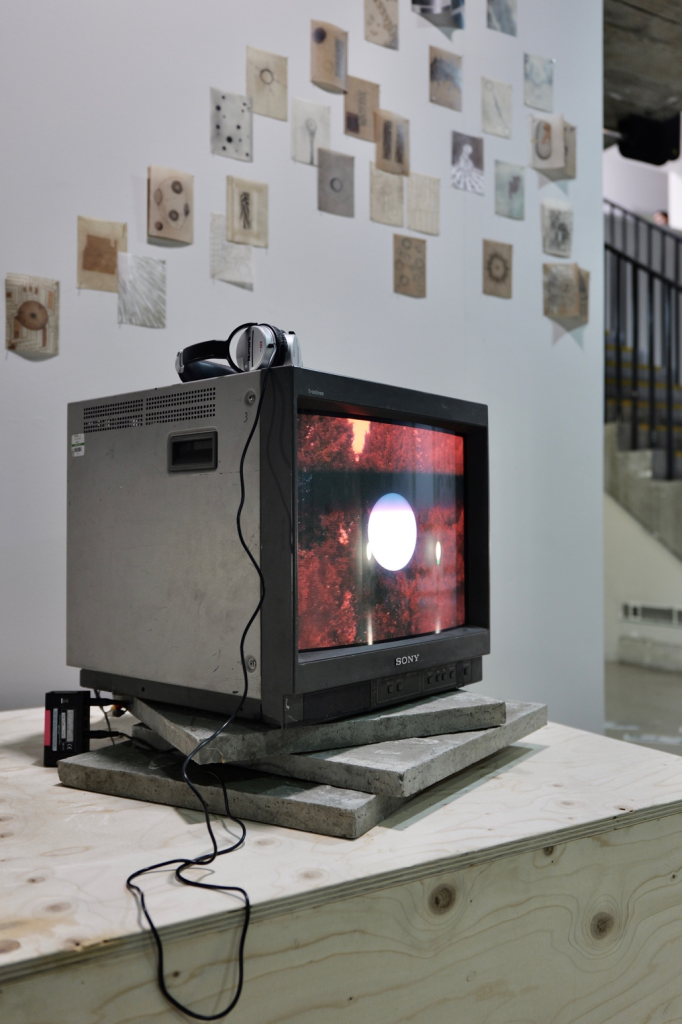
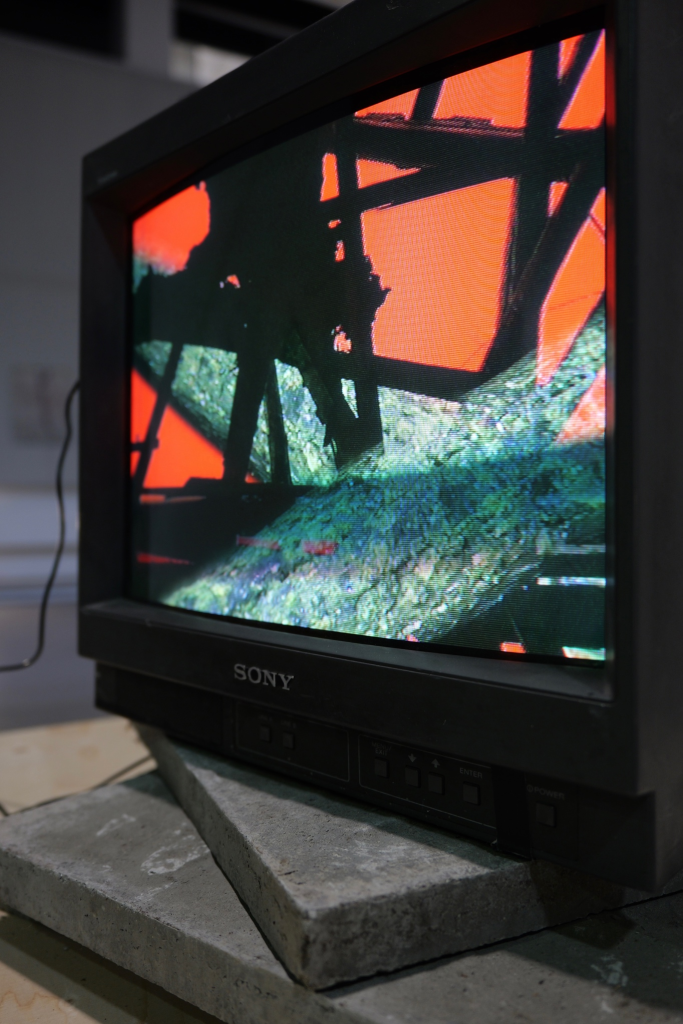
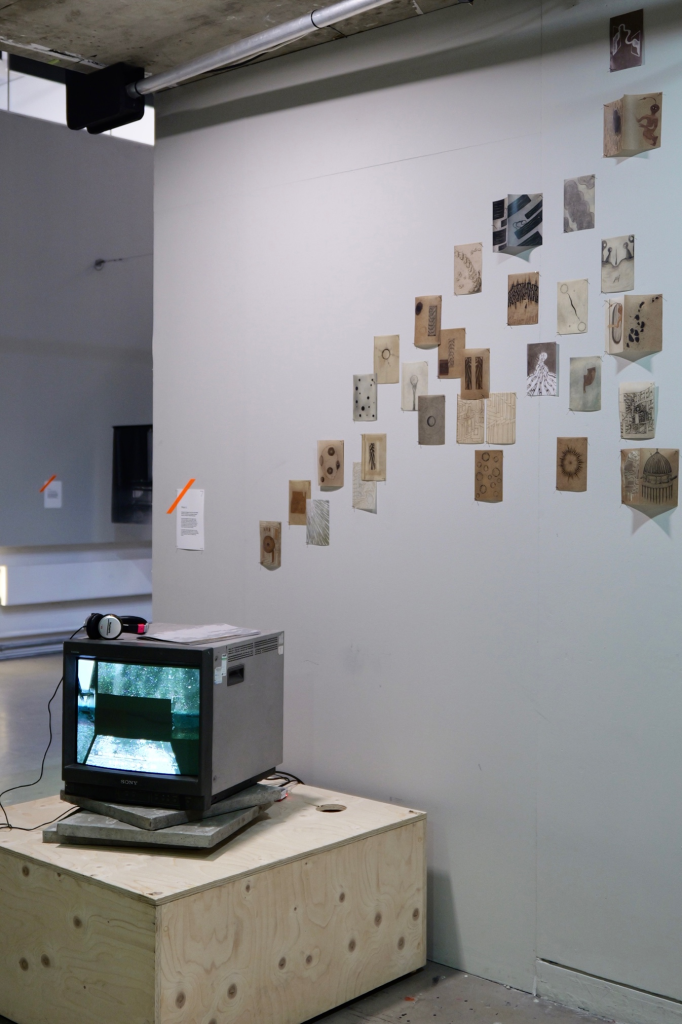
Xinyu Li 在她的实验影像与混合媒介作品《进士》(2026)中,探讨了宗族凝聚力与文化遗产在无形之中的消解。基于自我民族志研究以及她对客家葬礼仪式的亲身经验,这位伦敦艺术大学(UAL)博士生、罗德岛设计学院校友,考察了其祖籍村落中逐渐衰败的建筑景观。作品以一块蒙尘的“进士”匾额为核心——这一古老的荣誉称号意为“不断向前”——而如今,它却只能静静守望着一座座空置的房屋。通过这段充满情感力量的空间性旅程,李心瑜将集体记忆与家庭纽带如何从内部悄然瓦解、并随着社群四散而逐渐崩解的过程可视化,进而对现代化进程中那些不可见的作用力作出了深刻反思。
Xinyu Li explores the unseen dissolution of clan unity and cultural heritage in her experimental video and mixed-media work, Jinshi (2026). Drawing from autoethnographic research and personal experiences of Hakka funeral rituals, the University of the Arts London (UAL) PhD candidate and RISD alumna investigates the decaying architecture of her ancestral village. The work centers on a dust-veiled “Jinshi” plaque—an ancient honorary title meaning “one moves forward”—which now keeps vigil over empty homes. Through this poignant spatial journey, Li visualizes how collective memory and familial bonds silently fall apart from the inside as communities scatter, offering a profound reflection on the unseen forces of modernization.
“进士”是中国古代科举制度中的一种荣誉功名。在客家宗族文化中,进士匾额常被供奉于祠堂之中,作为家族荣耀的象征;其名称本身也带有“不断向前”的寓意。然而对于今日的客家社群而言,这种承诺似乎已显得遥远,取而代之的是撤退与衰落的现实。
一块蒙着尘灰的进士匾至今仍悬挂在宗祠之中,静静守望着一座座空置的房屋。在它的静默之中,它依然坚持存在,而人们却不断离去,离开村庄,四散他方,去寻找另一种“前行”的可能。
“Jinshi” was an honorary degree in the imperial examinations of ancient China. Within Hakka clan culture, a Jinshi title was often preserved in the ancestral hall as a symbol of family honour, its name meaning “one moves forward.” For Hakka communities today, that promise feels distant, shaped instead by retreat and decline. A dust-veiled Jinshi plaque still hangs in the clan hall, keeping vigil over empty homes. In its stillness, it perseveres as people drift away, leaving the village behind, scattering in search of a different way forward.
Jinshi is an experimental video work. It draws on personal visits to ruins and experiences of funerals to explore the features of Hakka architecture. The work begins with the last time I accompanied my grandfather back to the remote village for a funeral, and ends with the most recent return for his funeral. Through this journey, the sense of unity within a clan slowly falls apart from the inside.
Xinyu Li
Video: 1440 x 1080p, Book: 21 × 29.7 cm;
Illustrations: 10.5 × 14.8 cm
Video, Book, Illustrations (Mixed media)
2026
行倩文 | QIANWEN XING
The Initial Dinner
影像|Video
About 行倩文|Qianwen Xing(Mimi)
行倩文(Mimi)是一位具有纺织背景、现就读于皇家艺术学院的艺术家。她的创作横跨装置艺术与可穿戴艺术,并专注于综合媒介实践。以叙事为驱动,她的作品围绕结构、材料与色彩展开,关注不同材料如何唤起特定的感受与意义,以及其所承载的文化联想与情感共鸣。通过以材料为核心的实验方法,她借助这些特质去表达有关亲密关系与权力的思考,并将个人经验转化为作品。
Qianwen Xing (Mimi) is an artist with a background in textiles and is currently studying at the Royal College of Art. Her practice spans installation and wearable art. She specialises in mixed-media practice. Driven by storytelling, her work explores structure, material, and colour. She is interested in how different materials can evoke particular feelings and meanings, as well as the cultural associations and emotional resonances they carry. Through material-led experimentation, she uses these qualities to express ideas around intimacy and power, translating personal experiences into work.
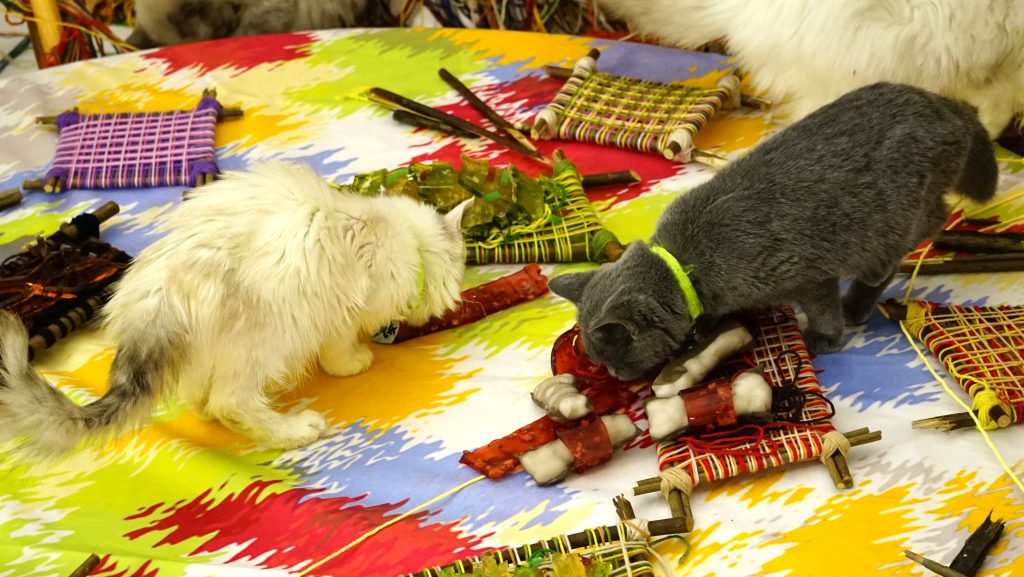
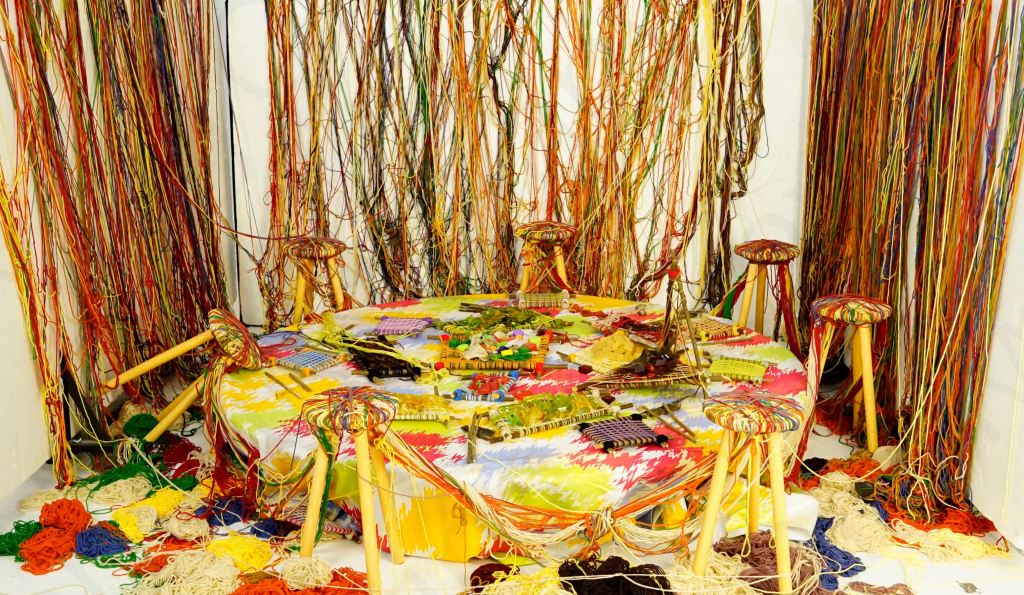
这个项目探讨了晚宴文化中所嵌入的社会关系与身份问题。通过将一套“动物系统”引入人类的进食行为之中,作品以一种讽刺性的方式反思:在当代晚宴文化里,人们如何逐渐失去了对食物最本能的回应。
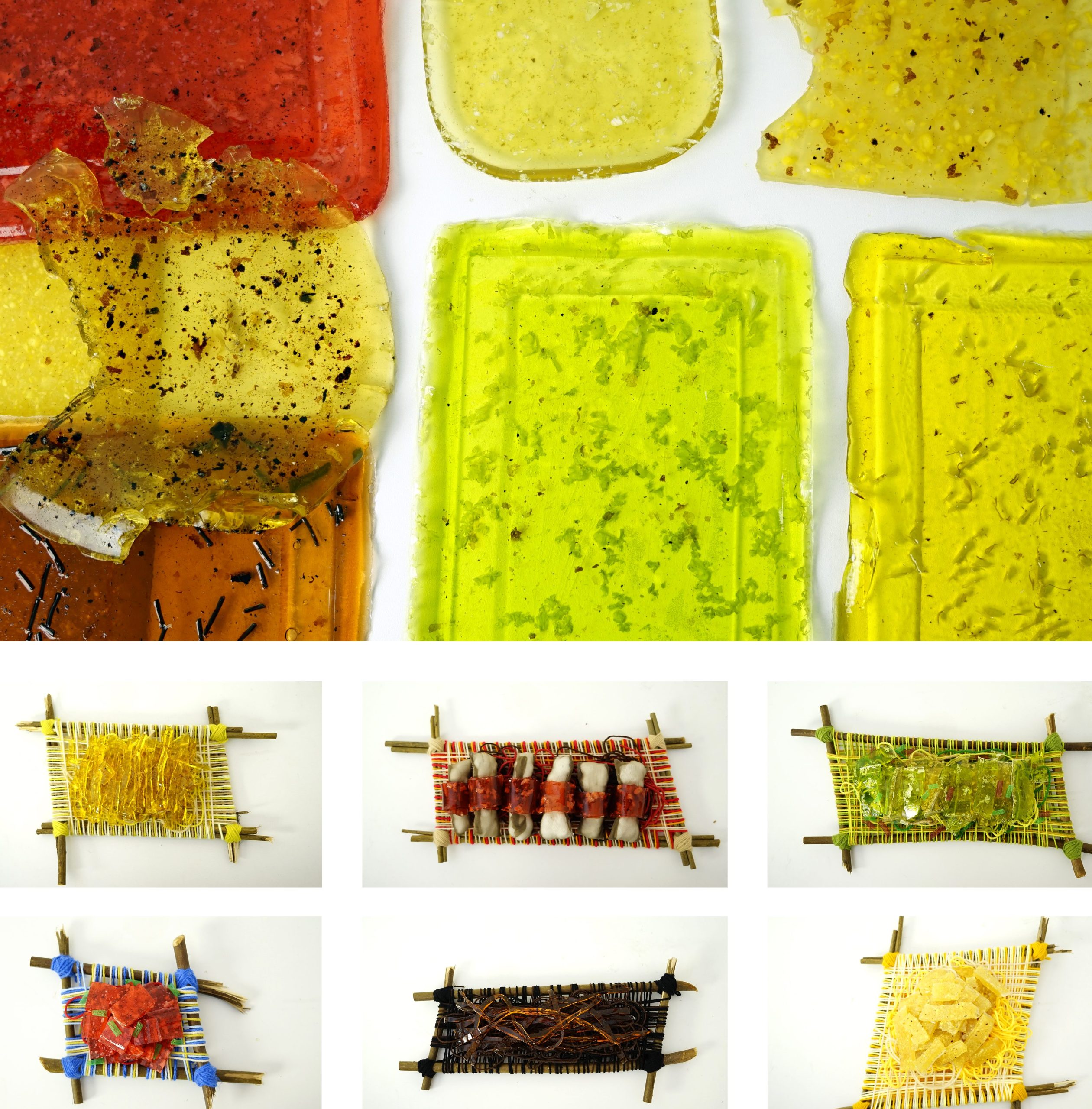
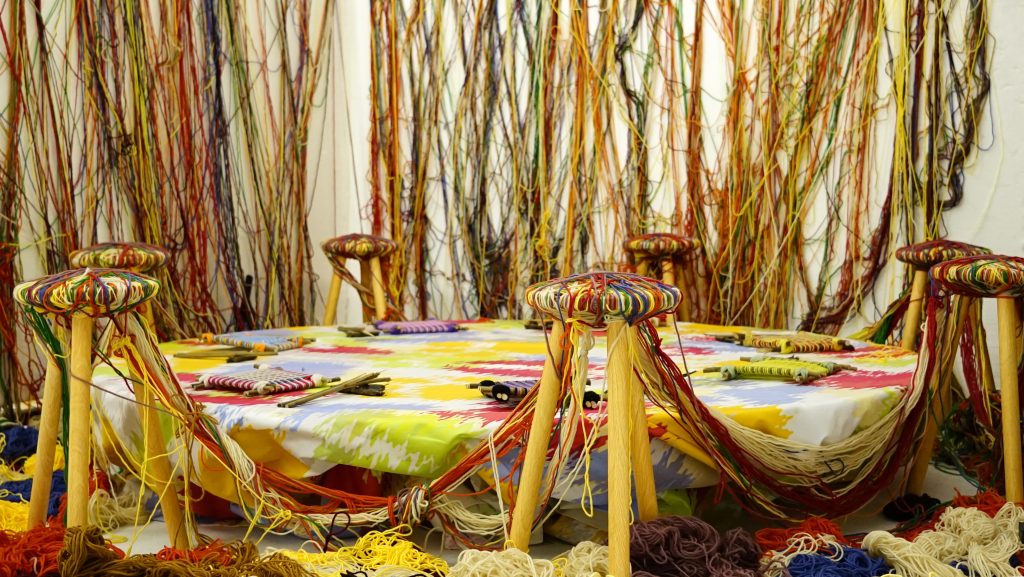
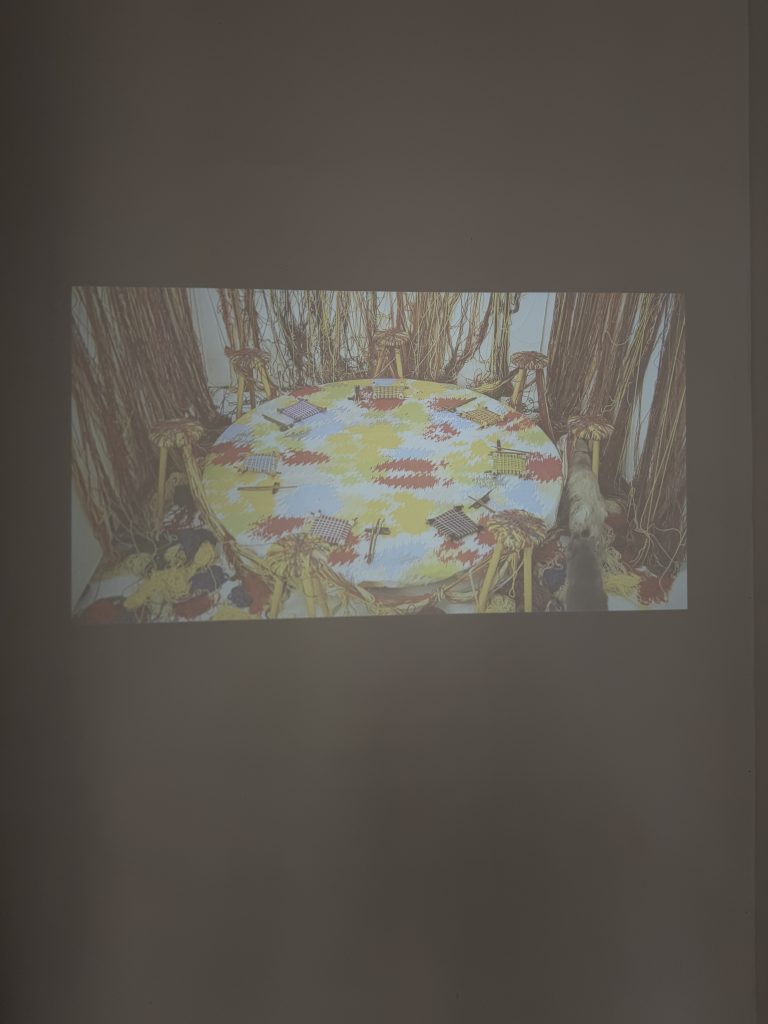
作品以“动物剧场”的形式呈现,其中食物、纺织物与场景均由艺术家亲手制作与搭建。
结合直接的现实感与现场事件的偶然性,这场剧场在三小时内展开,重构了一次晚宴聚会的完整过程。在这一环境中,动物不可预测的行为不断介入材料与场域的形成,并最终塑造了整个空间。作品中的材料变化同样由动物不确定的行动所决定,从而生成了对空间的二次创作。
通过将一个可见的场景与不可控的行为并置,作品回应了隐藏在晚宴文化表层之下的社会结构、身份关系与权力机制。看不见,并不代表不存在。
This project examines the social relationships and questions of identity embedded within dinner party culture. By introducing an animal system into human eating behaviour, the work satirises and reflects on how, within contemporary dinner party culture, people have gradually lost their most instinctive response to food.
The work is presented as an “animal theatre,” in which the food, textiles, and setting are all handmade and constructed.
Combining a direct sense of reality with the contingency of a live event, the theatre unfolds over three hours and reconstructs the full process of a dinner gathering. Within this environment, the animals’ unpredictable behaviour continuously intervenes in the formation of the materials and the site, ultimately shaping the entire space. The material changes within the work are likewise determined by the animals’ uncertain actions, producing a secondary creation of the space.
By placing a visible scene alongside uncontrollable behaviour, the work responds to the social structures, identities, and power relations concealed beneath the surface of dinner party culture. What is unseen does not mean it does not exist.
Qianwen Xing (Mimi)
3’00”
Video
2024
杨景超 | JINGCHAO YANG
消逝的河道|Vanishing Rivers
AI生成影像|AI Generate Video
About 杨景超|JINGCHAO YANG
杨景超是一位以动态影像、数字媒介与空间化声音作为主要创作语言的艺术家。他的实践关注技术、工业景观与生态环境之间不断演变的关系。通过将影像捕捉、数字重构与环境声景相互交织,杨景超构建出一种连接现实与模拟的视觉语境。在他的作品中,河流、地质形态、工业设施以及被改变的自然环境常常成为关键线索。这些元素既是物理世界的具体显现,也象征着人类文明与地球生态系统之间持续不断的互动。
Jingchao Yang is an artist utilising moving images, digital media and spatialised sound as his primary creative languages. His practice explores the evolving relationship between technology, industrial landscapes and ecological environments. Through the interweaving of image capture, digital reconstruction and environmental soundscapes, Yang constructs a visual context that bridges the real and the simulated. Within his works, rivers, geological formations, industrial installations, and altered natural environments frequently emerge as pivotal threads. These elements are both tangible manifestations of the physical world and symbols of the ongoing interaction between human civilisation and the Earth’s ecosystems.
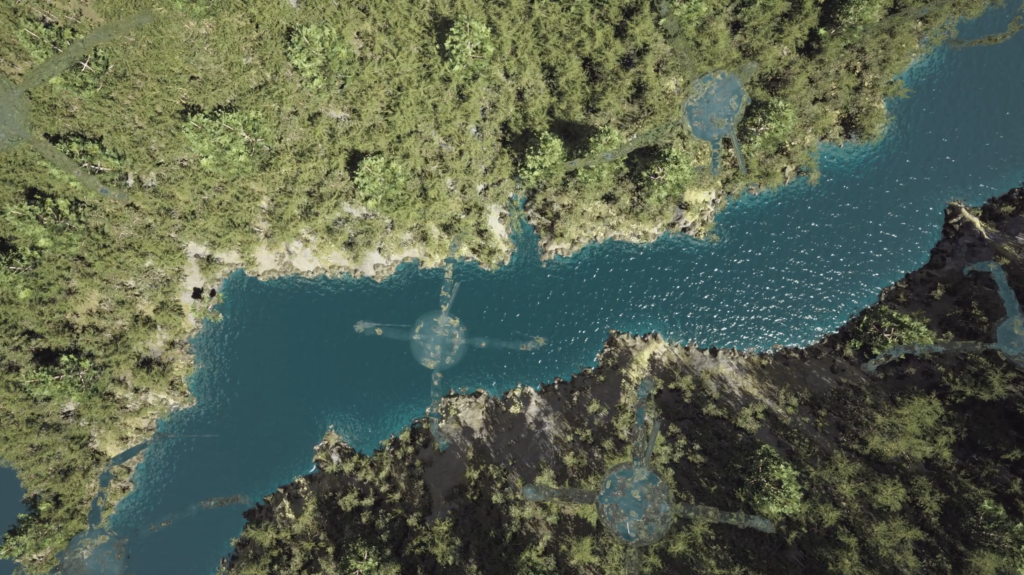
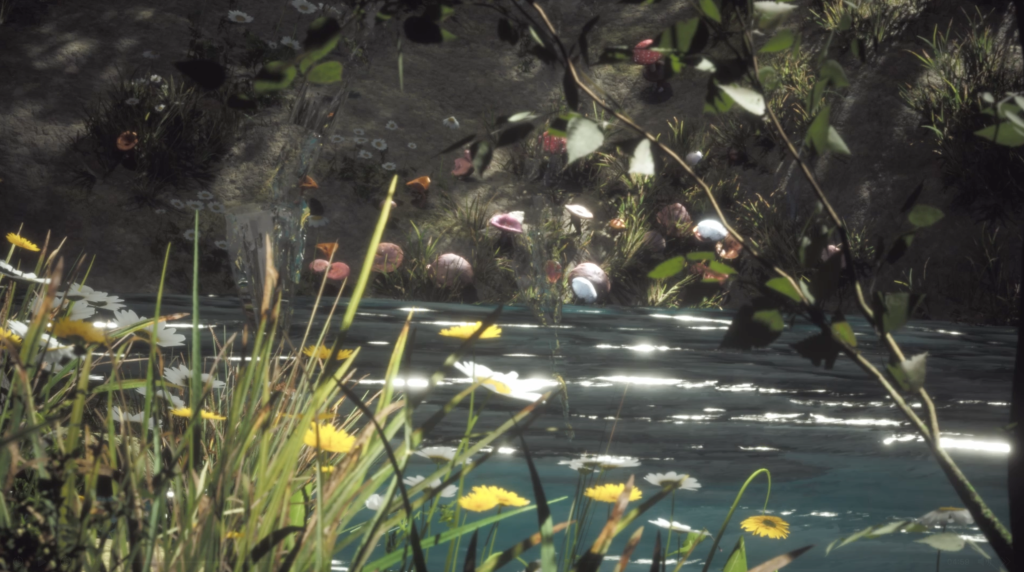
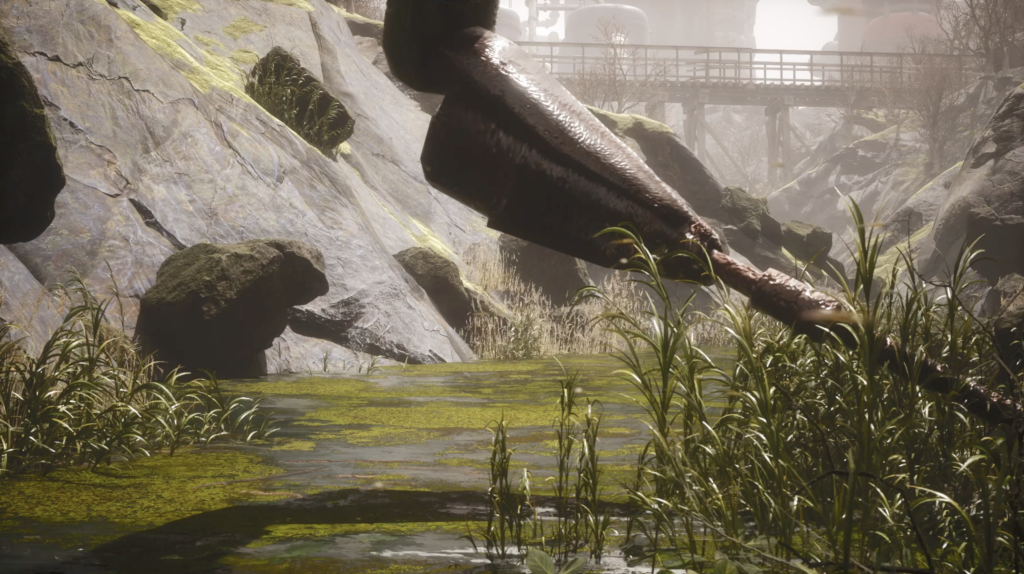
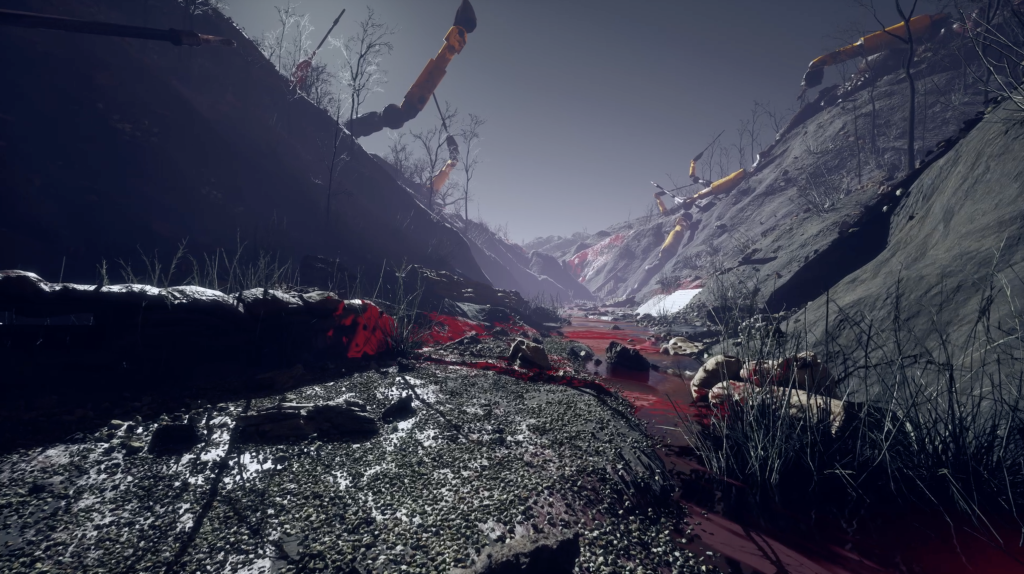
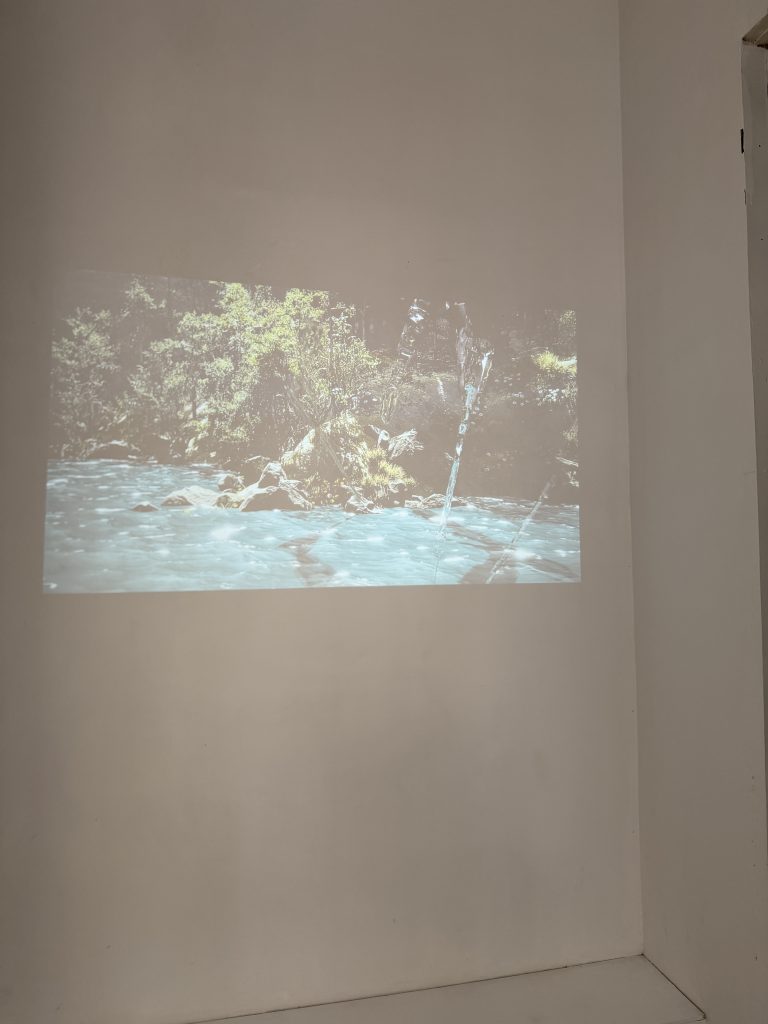
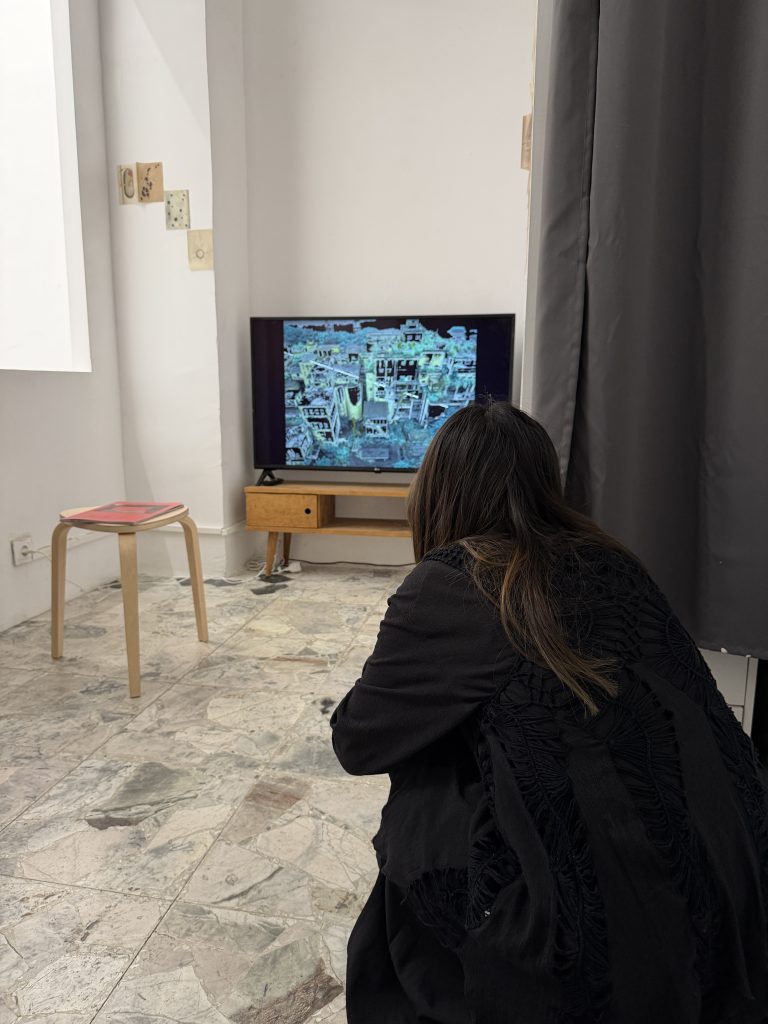
《Vanishing Rivers》运用实时渲染与多通道影像,呈现河流从丰沛流动走向完全干涸的动态过程。作品在宏观的河流景观与微观的水生生态系统之间不断切换,捕捉水位退缩、河床裸露以及生物活动受限等细微变化。工业遗迹与荒芜地貌交织并置,象征着人类对水循环持续不断的干预与破坏。
作品通过水声、风声与开裂声营造出一种紧张而沉浸的氛围,使观者意识到环境失衡的现实,并进一步思考水资源危机与我们未来生活之间的关联。
Vanishing Rivers employs real-time rendering and multi-channel imagery to depict the dynamic process of rivers transitioning from abundant flow to complete desiccation. The work shifts between macro river landscapes and micro aquatic ecosystems, capturing subtle shifts in receding water levels, exposed riverbeds, and constrained biological activity. Industrial relics intertwine with desolate terrain, symbolising humanity’s persistent disruption of the water cycle.
The work creates a tense, immersive atmosphere through the sound of water, wind, and cracking sounds, making people aware of the imbalance in the environment and thinking about the connection between the water crisis and our future lives.
Jingchao Yang
Video
5’00”
2026
朱嘉汶 | JIAWEN ZHU
此处为迹 | Track Me Here
木板, 实验装置|Wooden board, Experimental Installation
About 朱嘉汶|JIAWEN ZHU
她是一位常驻伦敦的设计师,拥有跨学科的创作实践,结合了交互设计、叙事与社会参与式艺术。凭借交互设计艺术背景,她致力于创造能够促进情感连接与公众参与的参与式体验。她尤其关注人们如何在日常环境中穿行、理解并建立联系。通过融合创意设计、共创方法与感官体验,她的作品聚焦于日常关系,同时回应关怀、连接、归属感以及设计在日常生活中所扮演角色等更广泛的主题。
is a London-based designer with a multi-disciplinary practice combing interaction design, storytelling and socially engaged art. With a background in Interaction Design Arts, she creates participatory experiences that foster emotional connection and public engagement. She is particularly interested in explore how people navigate, interpret, and connect within their everyday environments. Blending creative design, co-creation and sensory experience, her work highlights everyday relationships while addressing broader themes of care, connection, belonging and the role of design in daily life.
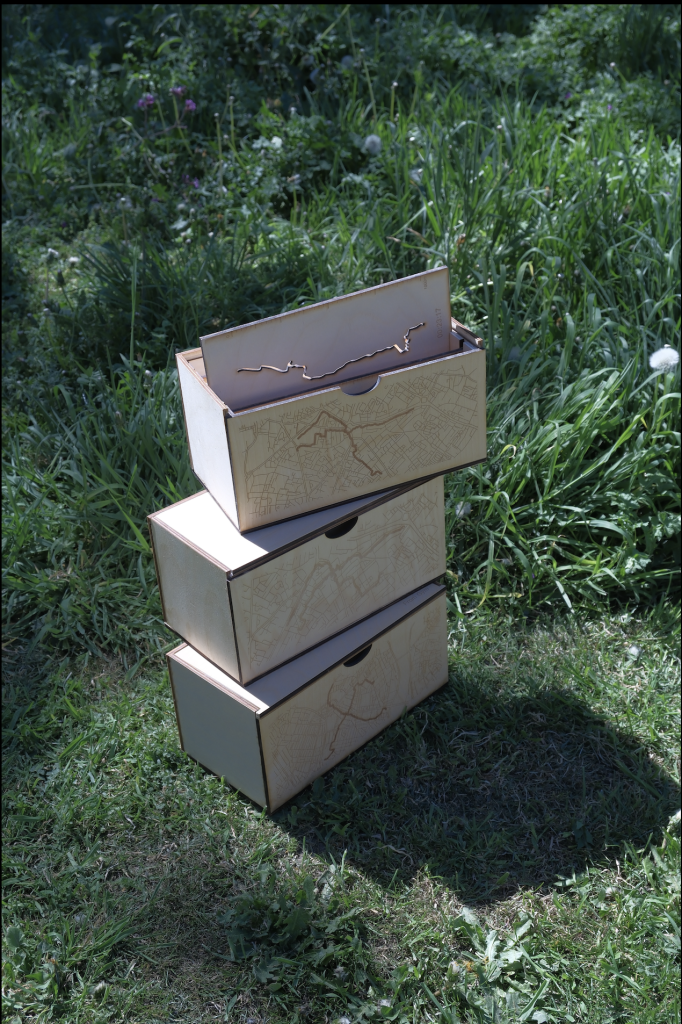
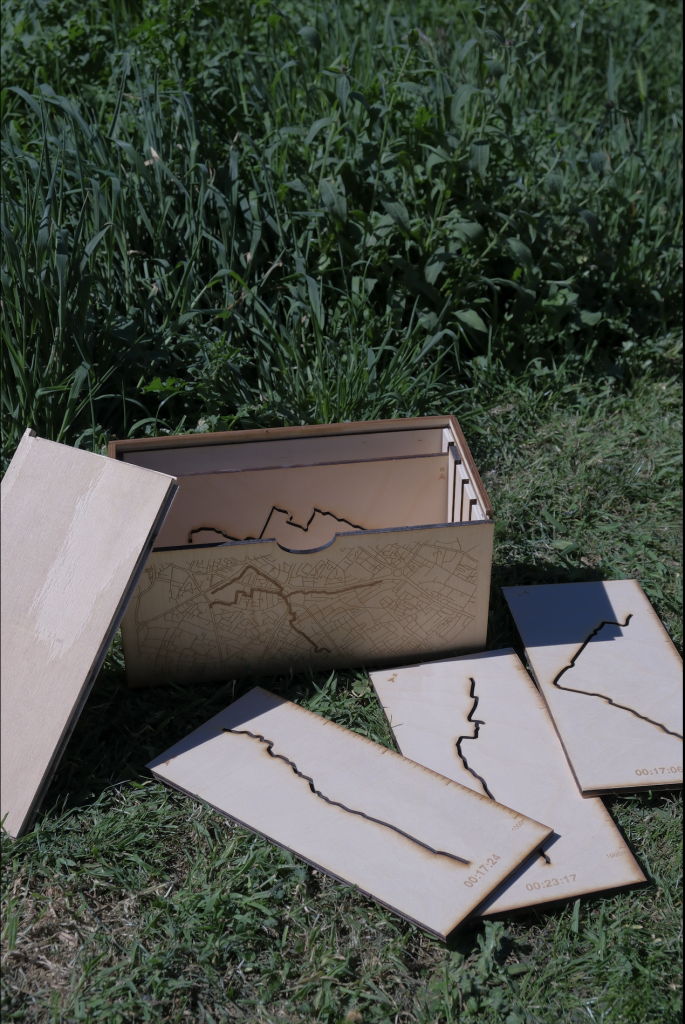
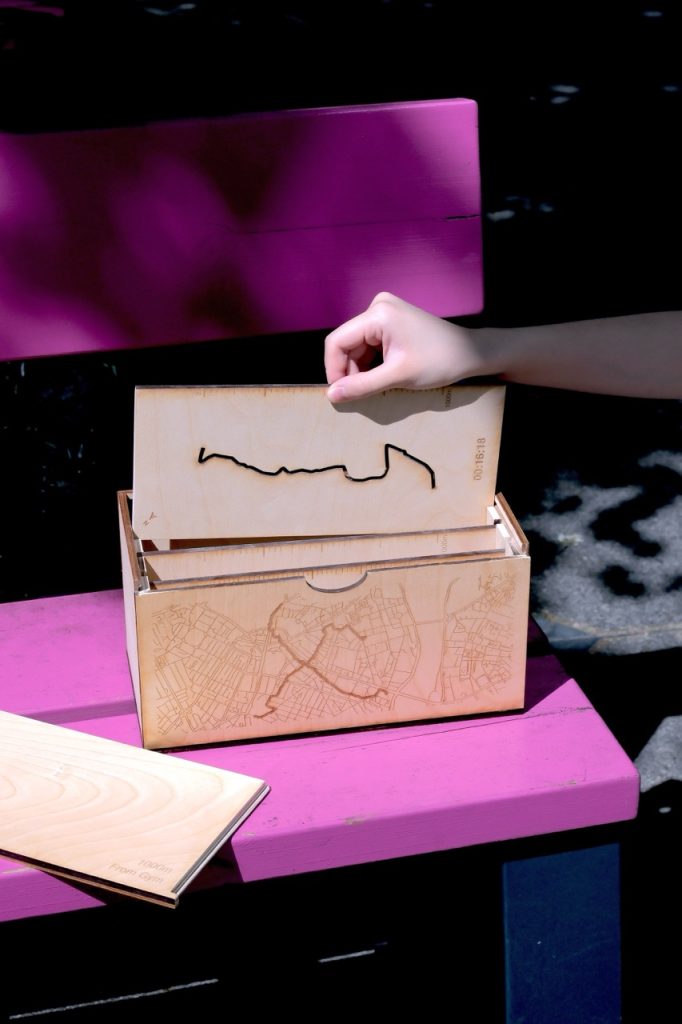
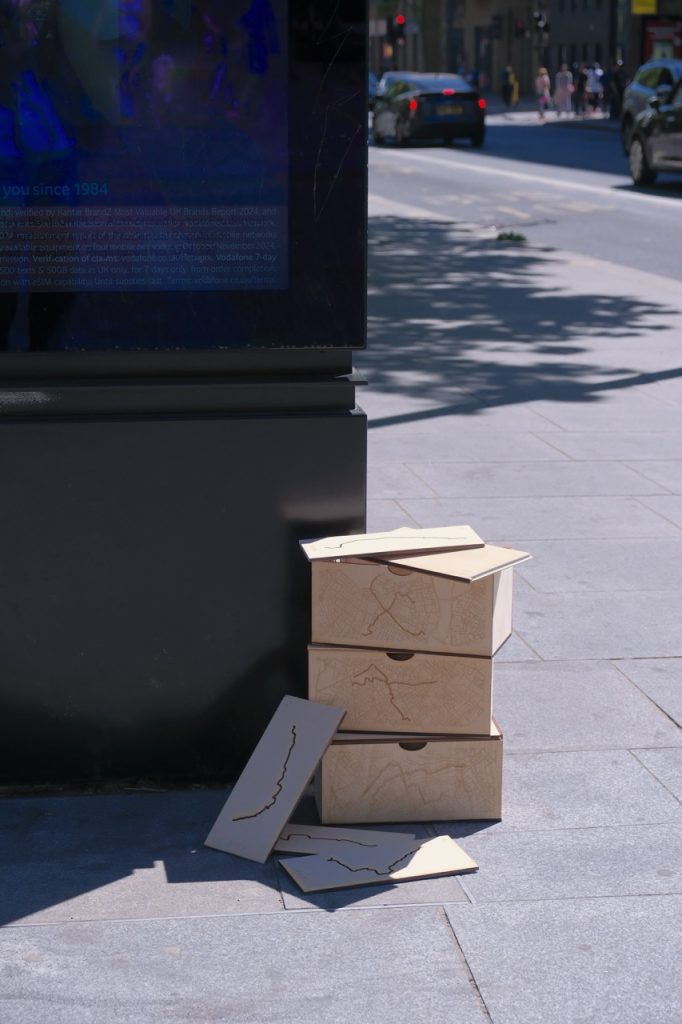
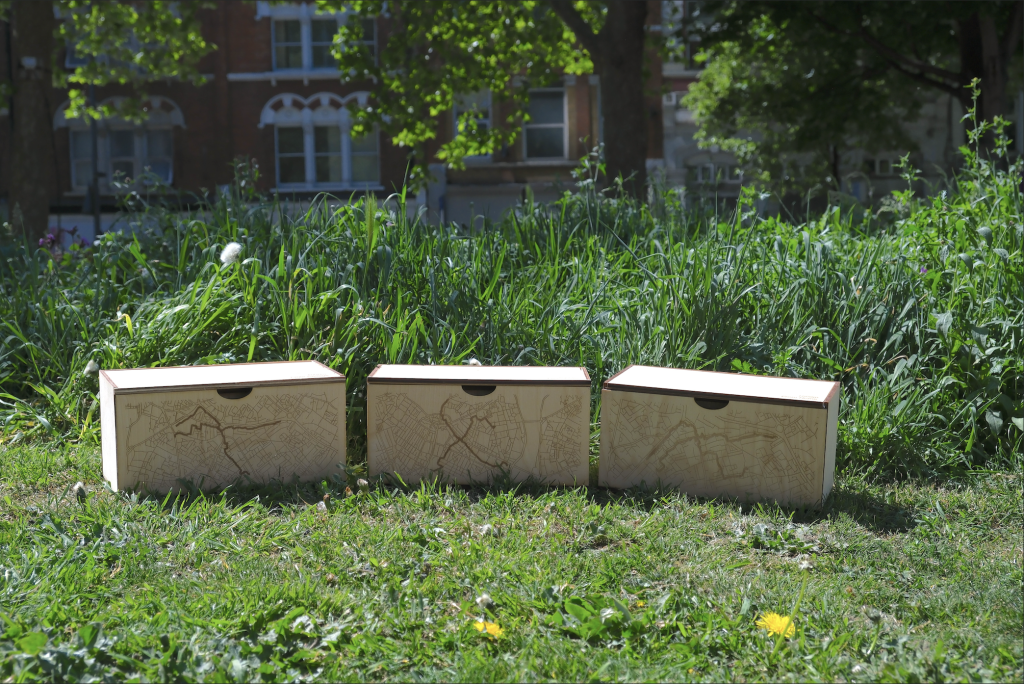
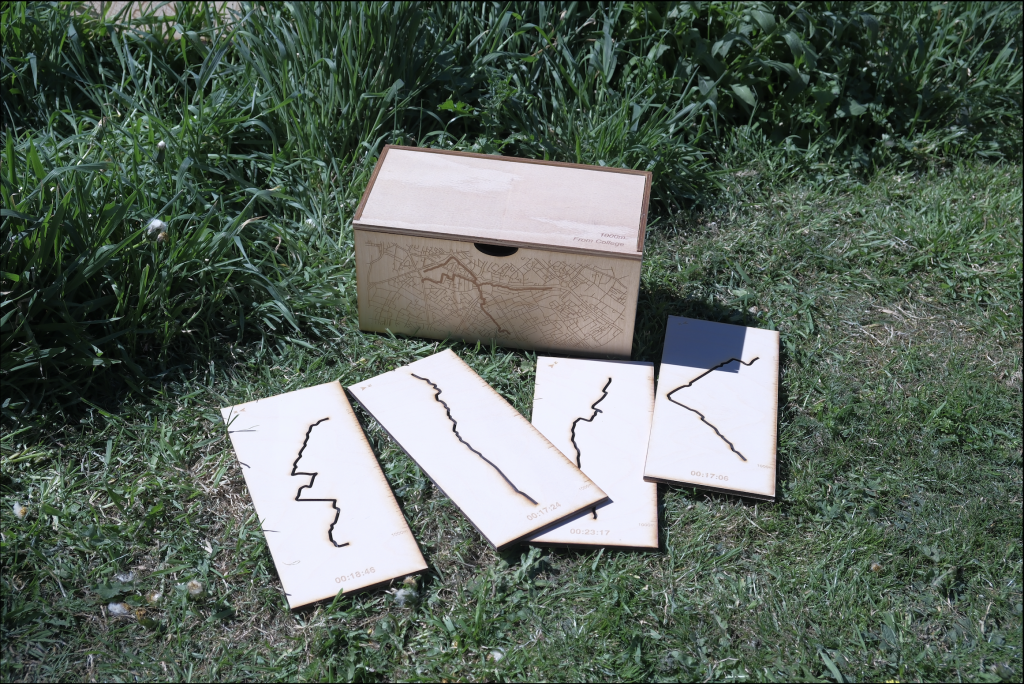
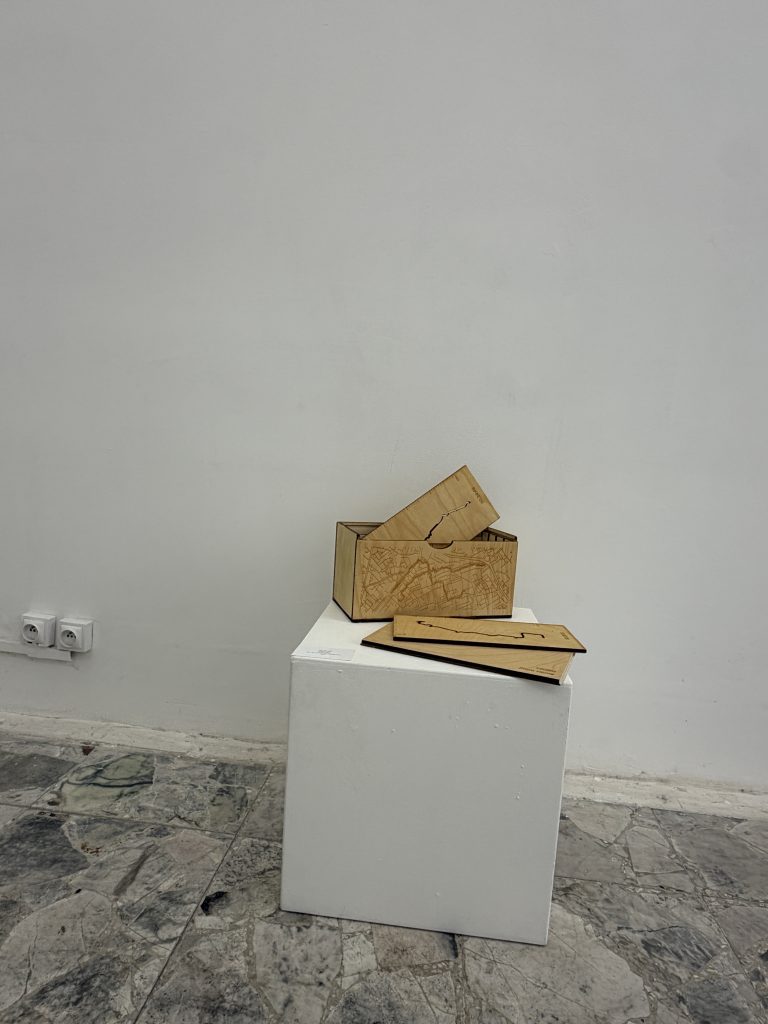
《Track Me Here》是一件实验性艺术作品,将熟悉的日常路径与陌生的探索方式连接起来。作品以城市中的“漂移式”步行为方法,记录由空间、时间与移动共同塑造的轨迹模式,并以独立盒装作品的形式呈现。它起始于艺术家对传统地图的个人疏离感,并进一步探讨步行如何影响我们对空间的感知。
通过从熟悉地点出发,分别向南、东、北、西进行一系列1000米步行,作品揭示出:衡量我们与地点之间心理连接的,往往并非物理距离本身,而是时间。通过这一过程,作品以创造性的方式重新描绘日常生活的路径,并通过移动、记忆与材料形式,重新建立与城市之间的联系。
Track Me Here is an experimental art piece that connects familiar routines with unfamiliar mode of exploration. It documents patterns shaped by space, time, and movement through dérive-style walking in the city, presented in individual box sets. Beginning from a personal disconnection with traditional maps, the work investigates how walking influences our perception of space.
Through a series of 1000m walks from familiar locations, starting from the South, East, North, and West, it reveals how time measures our psychological connection to place more than physical distance. Through this process, the artwork creatively remaps everyday routines and re-connects with the city through movement, memory and material form.
Jiawen Zhu
33 × 15 × 15 cm (×3)/ Variable Size
Wood board
2025
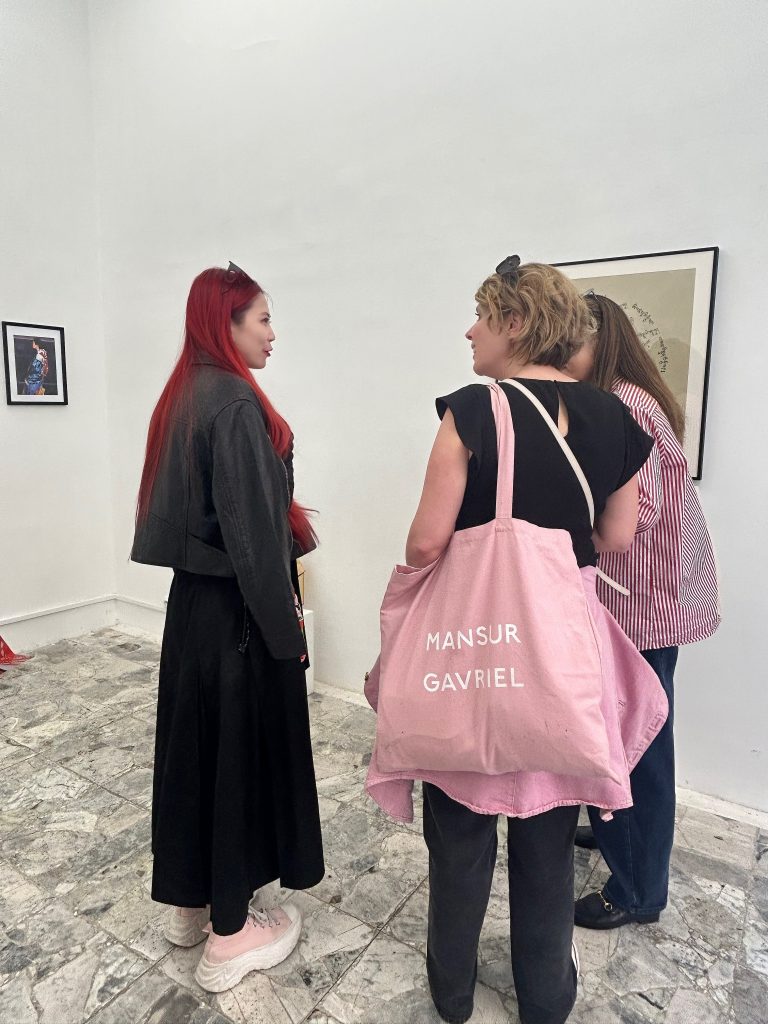
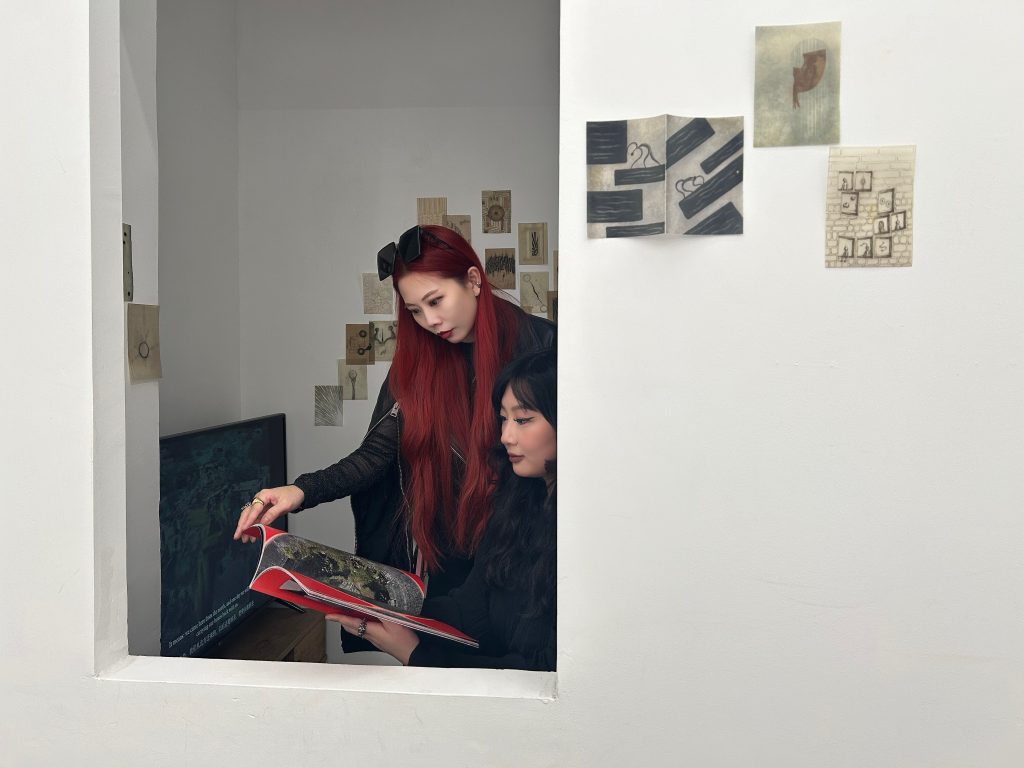
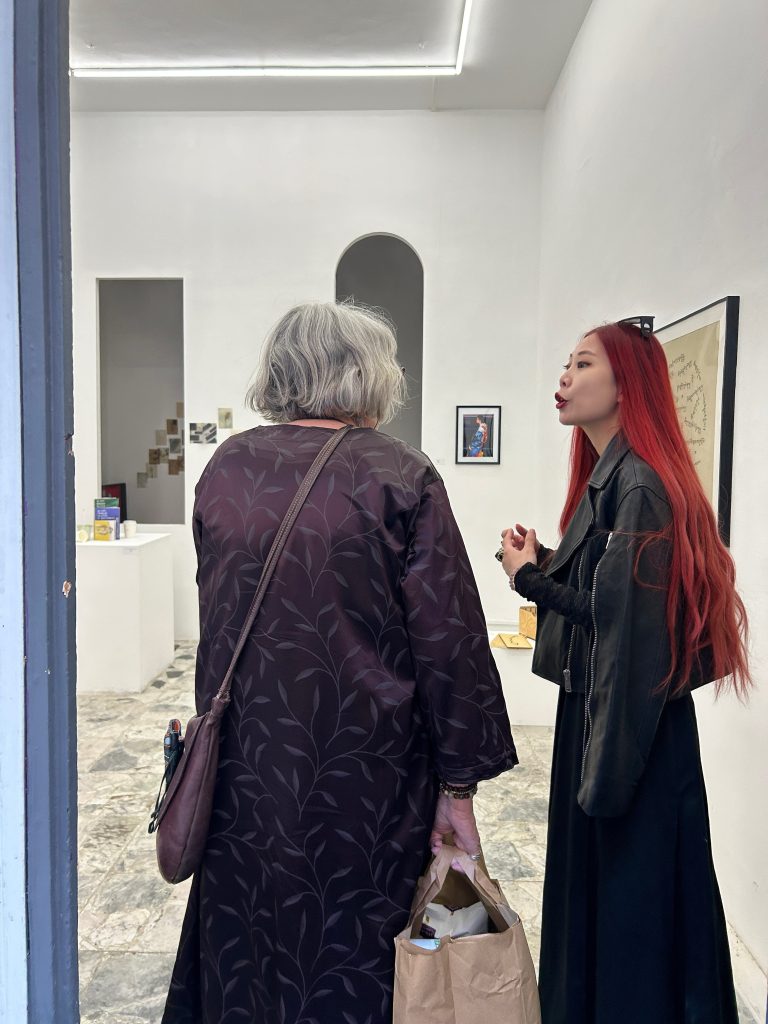
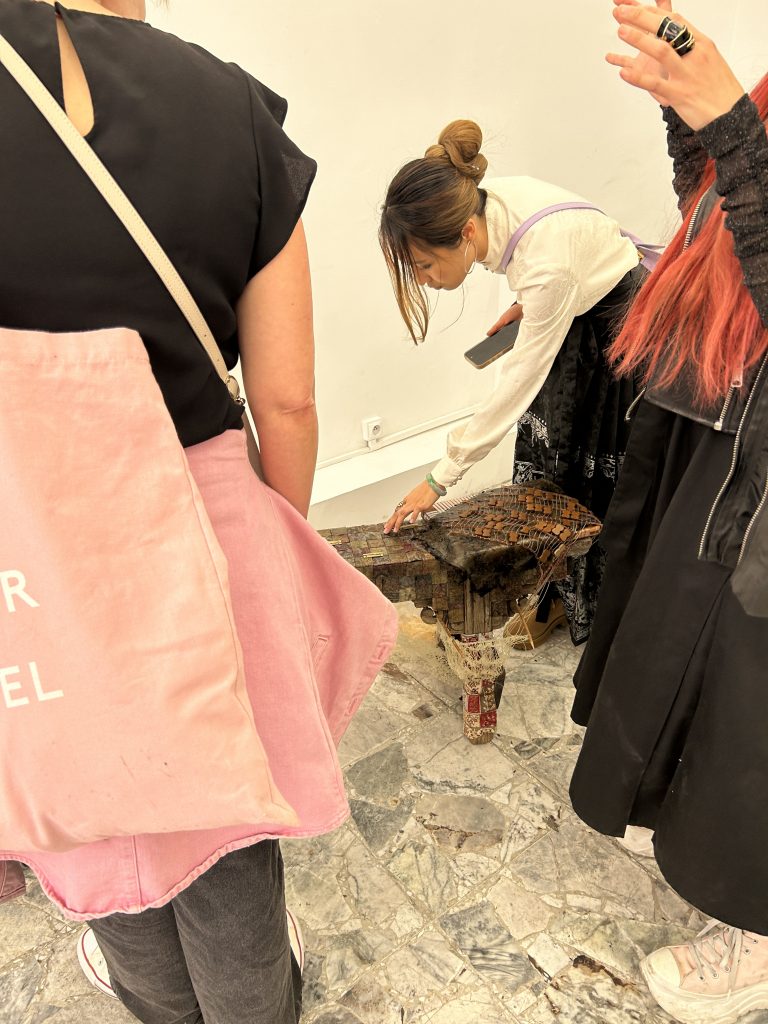
展览回顾 | Exhibition Highlights
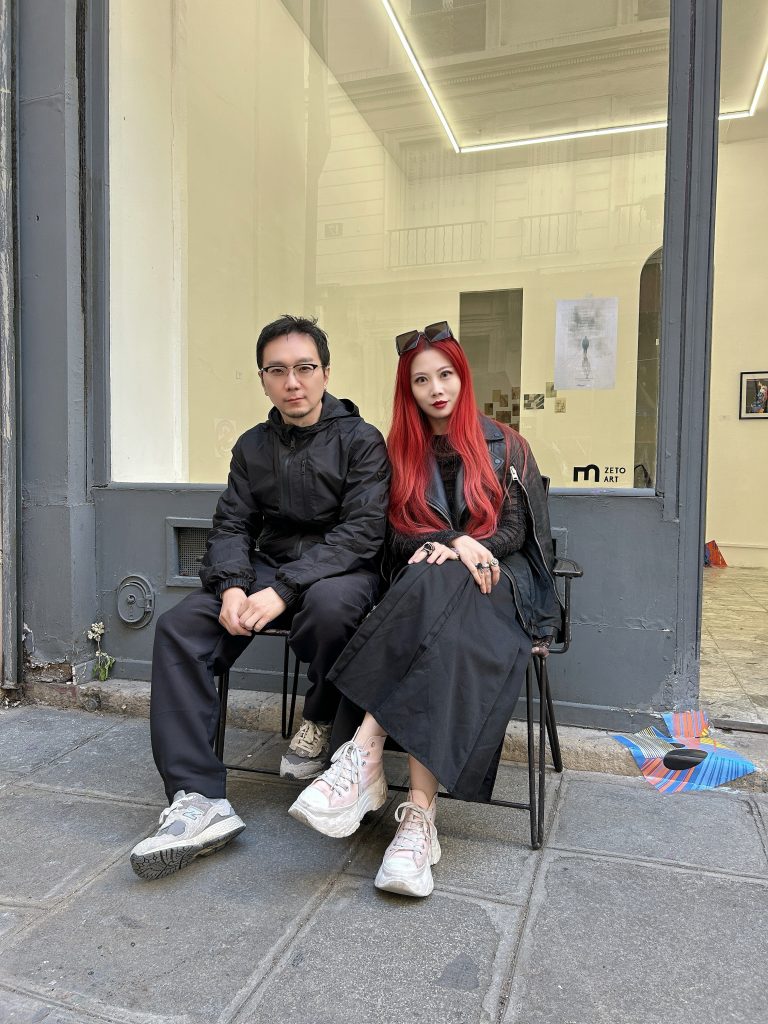
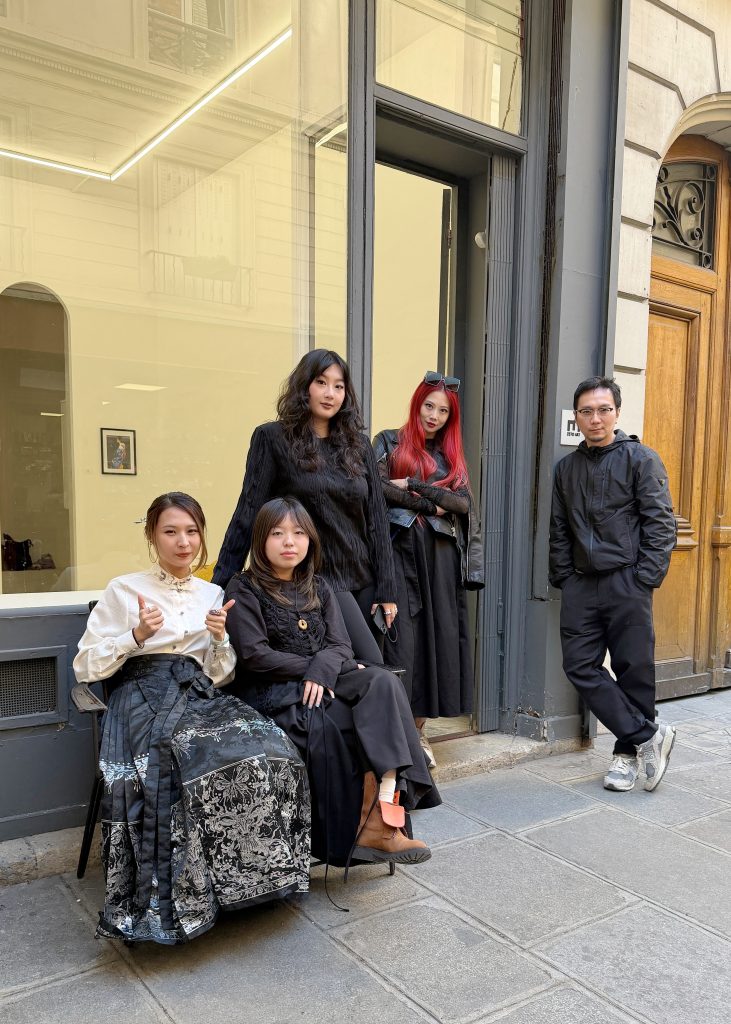
展览信息 | Exhibition Information
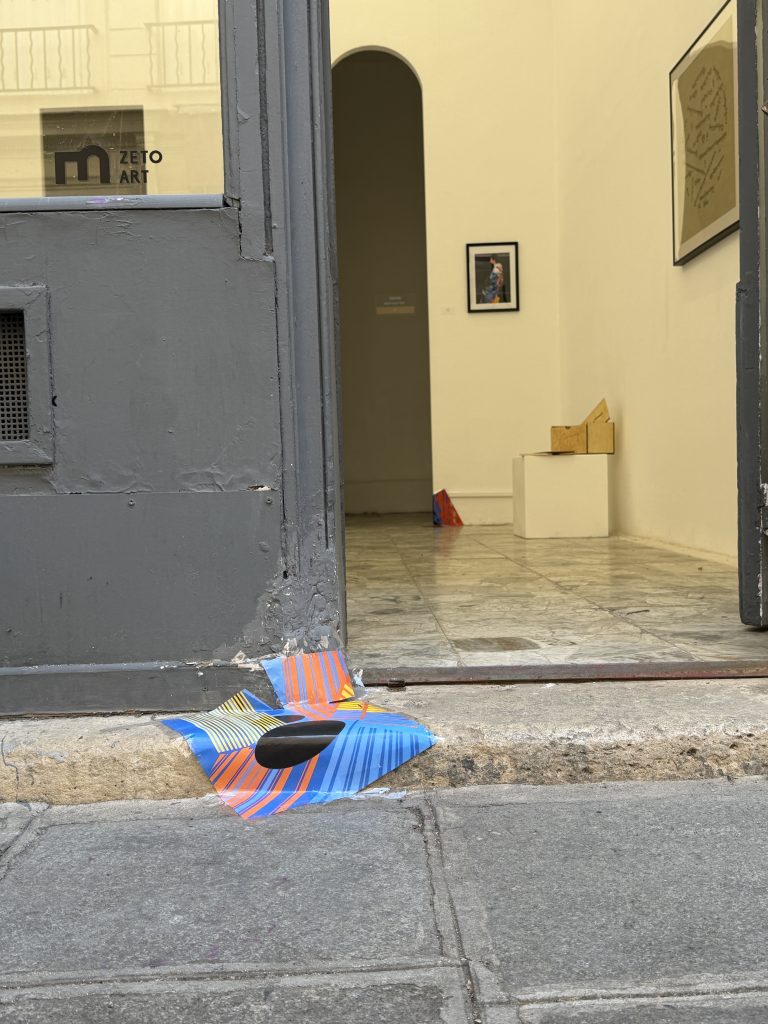
THE UNSEEN – ECHOES IN PARIS
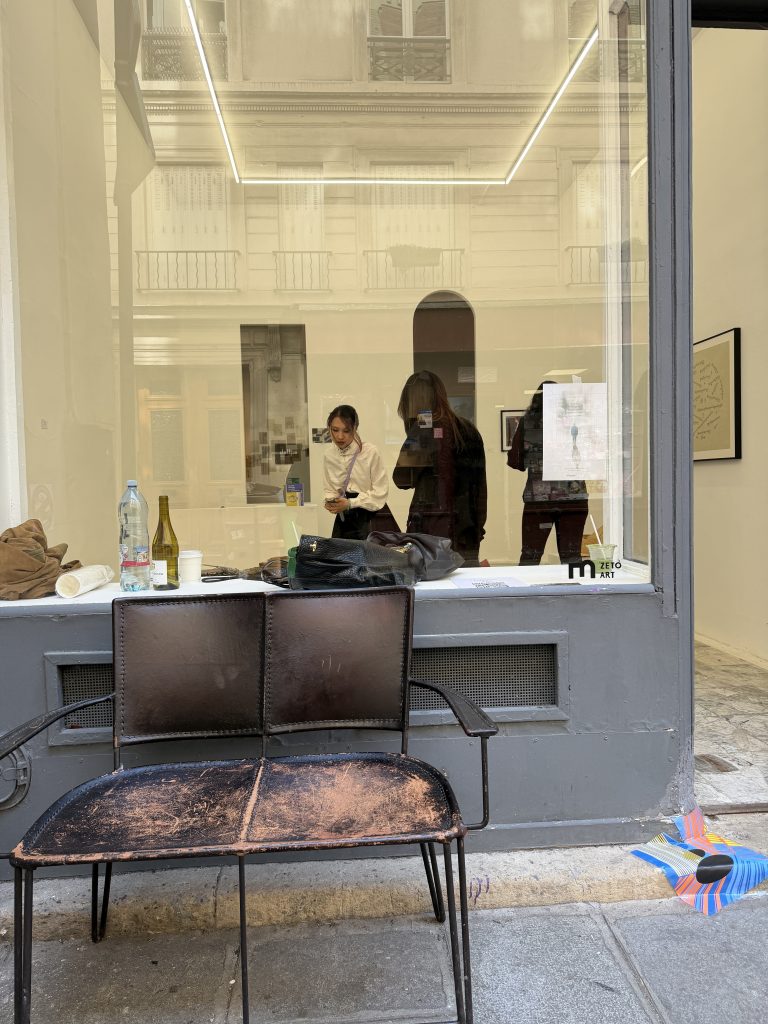
Zeto Art, 18 Rue Chapon, 75003 Paris, France
April 24–29, 2026
Presented by MuchARTProjects
罅隙之光 – ECHOES IN PARIS
Zeto Art, 18 Rue Chapon, 75003 Paris, France
2026年4月24日–4月29日
由 MuchART Projects 呈现
视觉设计|Visual Design Kirk Zhang @ksfotoland
策展人|Curator Yuran Lin @yukimaybe
网页设计|Web Design Bohao Feng @marcusd