
BOHAO FENG |冯博昊
冯博昊 (Marcus Feng) 是一位常驻伦敦的视觉与数据可视化设计师,工作横跨平面设计、数据可视化与出版设计领域。他的实践聚焦于构建以研究为导向的视觉系统,以回应社会议题。他的作品通过数据驱动的叙事,探讨健康、消费与集体经验等主题。近期项目关注外卖包装污染,将系统性增长与个体行为联系起来,揭示日常消费背后被隐藏的影响。其创作连接东西方视角,将数据分析与视觉叙事相结合,以反思当代社会中的文化与情感维度。
Marcus Feng (Bohao Feng) is a London-based visual and data visualisation designer working across graphic design, data visualisation, and publication. His practice focuses on building research-led visual systems to engage with social issues. His work explores themes of health, consumption, and collective experience through data-driven narratives. Recent projects investigate takeaway packaging pollution, connecting systemic growth with individual behaviour to reveal the hidden impacts of everyday consumption. Bridging Eastern and Western perspectives, his practice combines data analysis with visual storytelling to reflect on the cultural and emotional dimensions of contemporary society.

Marcus Feng
Book
18 × 25 cm
2024
Food delivery package waste pollution, driven by food and packaging waste from takeaway consumption, has intensified since the COVID-19 pandemic. As lockdowns accelerated mobile food ordering, the widespread use of takeaway services significantly increased environmental pollution and raised related health concerns. In particular, excessive packaging—characterised by multiple layers, unnecessary empty space, high material costs, and inappropriate material choices—has become a major contributor to this issue.
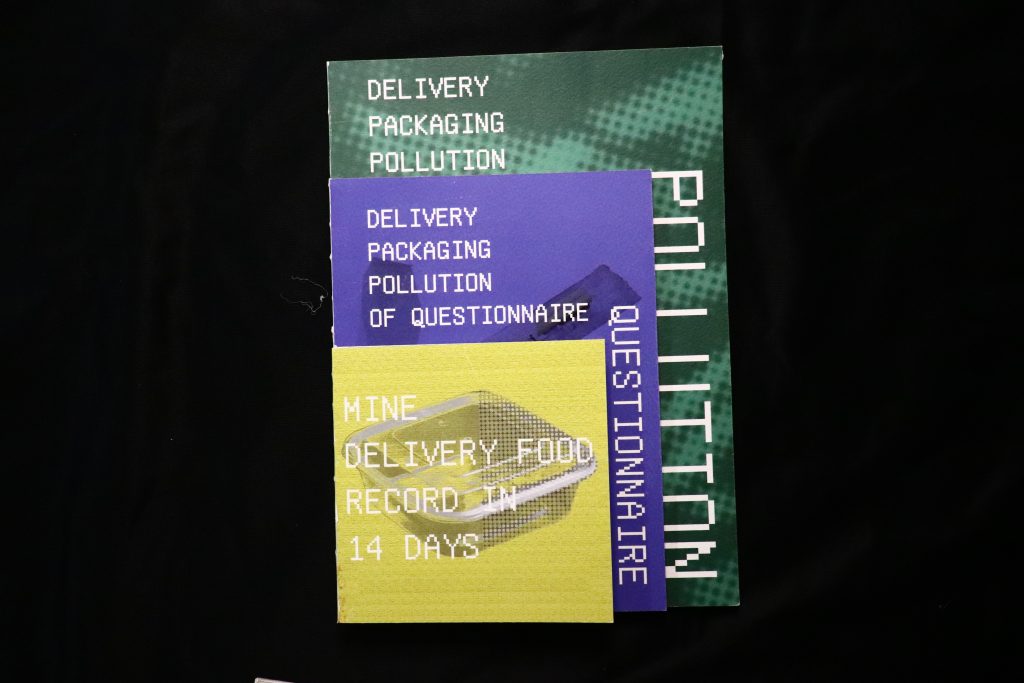
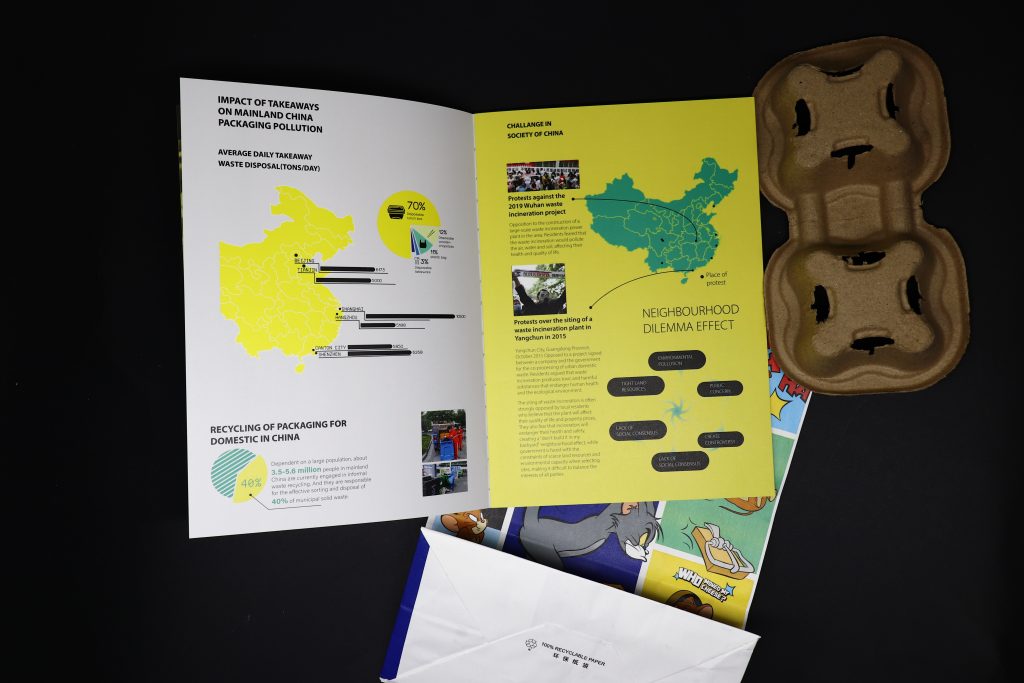
This project explores Food delivery packaging pollution through a multi-layered, data-driven approach. By analysing social, regional, and environmental data, it reveals the link between the rapid growth of takeaway consumption and escalating pollution. It also highlights a key paradox: while public awareness is generally high, the issue remains insufficiently addressed at both governmental and societal levels.
By shifting focus to everyday individual consumption, the project examines how waste is produced, perceived, and internalised, uncovering its impact on behaviour and material choices. Together, these perspectives form a critical narrative connecting systems, awareness, and lived experience within a consumption-driven society.
外卖包装废弃物污染主要由外卖消费过程中产生的食物浪费与包装浪费所驱动,自新冠疫情以来愈发加剧。随着封锁措施推动移动端点餐迅速增长,外卖服务的广泛使用显著增加了环境污染,并引发了相关的健康担忧。尤其是过度包装——表现为多层包装、不必要的空隙、高材料成本以及不恰当的材质选择——已成为这一问题的重要成因。
本项目以多层次、数据驱动的方法探讨外卖包装污染问题。通过分析社会、区域与环境数据,项目揭示了外卖消费快速增长与污染不断加剧之间的关联。同时,它也指出了一个关键悖论:尽管公众对此议题的认知普遍较高,但这一问题在政府与社会层面仍未得到充分应对。
通过将视角转向日常个体消费,项目进一步考察废弃物如何被生产、感知并逐渐内化,从而揭示其对行为方式与材料选择的影响。这些不同层面的观察共同构成了一条批判性的叙事线索,将消费社会中的系统结构、公众认知与个体生活经验连接起来。