
李昕瑜|Xinyu Li
Xinyu Li 在她的实验影像与混合媒介作品《进士》(2026)中,探讨了宗族凝聚力与文化遗产在无形之中的消解。基于自我民族志研究以及她对客家葬礼仪式的亲身经验,这位伦敦艺术大学(UAL)博士生、罗德岛设计学院校友,考察了其祖籍村落中逐渐衰败的建筑景观。作品以一块蒙尘的“进士”匾额为核心——这一古老的荣誉称号意为“不断向前”——而如今,它却只能静静守望着一座座空置的房屋。通过这段充满情感力量的空间性旅程,李心瑜将集体记忆与家庭纽带如何从内部悄然瓦解、并随着社群四散而逐渐崩解的过程可视化,进而对现代化进程中那些不可见的作用力作出了深刻反思。
Xinyu Li explores the unseen dissolution of clan unity and cultural heritage in her experimental video and mixed-media work, Jinshi (2026). Drawing from autoethnographic research and personal experiences of Hakka funeral rituals, the University of the Arts London (UAL) PhD candidate and RISD alumna investigates the decaying architecture of her ancestral village. The work centers on a dust-veiled “Jinshi” plaque—an ancient honorary title meaning “one moves forward”—which now keeps vigil over empty homes. Through this poignant spatial journey, Li visualizes how collective memory and familial bonds silently fall apart from the inside as communities scatter, offering a profound reflection on the unseen forces of modernization.
Xinyu Li
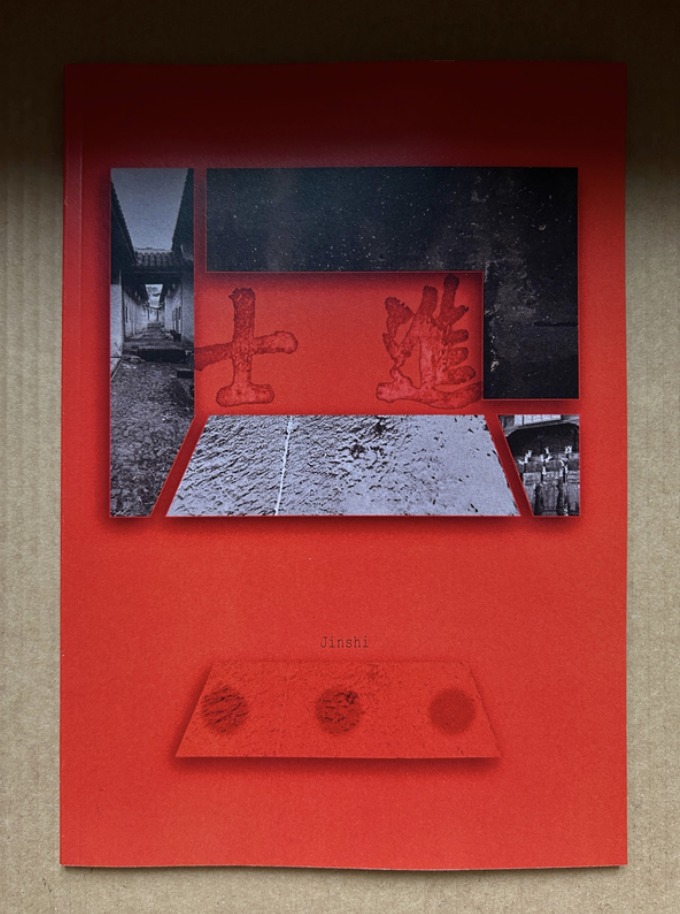
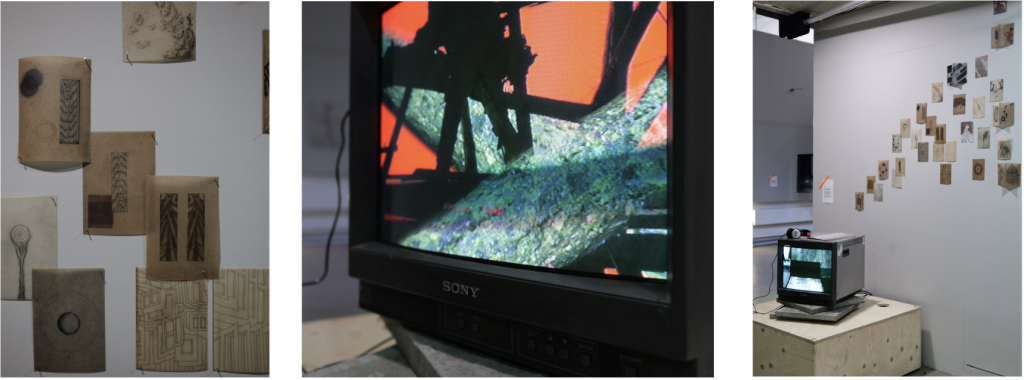
Video: 1440 x 1080p, Book: 21 × 29.7 cm; Illustrations: 10.5 × 14.8 cm
Video, Book, Illustrations (Mixed media)
2026
JINSHI |进士
“进士”是中国古代科举制度中的一种荣誉功名。在客家宗族文化中,进士匾额常被供奉于祠堂之中,作为家族荣耀的象征;其名称本身也带有“不断向前”的寓意。然而对于今日的客家社群而言,这种承诺似乎已显得遥远,取而代之的是撤退与衰落的现实。
一块蒙着尘灰的进士匾至今仍悬挂在宗祠之中,静静守望着一座座空置的房屋。在它的静默之中,它依然坚持存在,而人们却不断离去,离开村庄,四散他方,去寻找另一种“前行”的可能。
Jinshi (进士) was an honorary degree in the imperial examinations of ancient China. Within Hakka clan culture, a Jinshi title was often preserved in the ancestral hall as a symbol of family honour, its name meaning “one moves forward.” For Hakka communities today, that promise feels distant, shaped instead by retreat and decline. A dust-veiled Jinshi plaque still hangs in the clan hall, keeping vigil over empty homes. In its stillness, it perseveres as people drift away, leaving the village behind, scattering in search of a different way forward.
Jinshi is an experimental video work. It draws on personal visits to ruins and experiences of funerals to explore the features of Hakka architecture. The work begins with the last time I accompanied my grandfather back to the remote village for a funeral, and ends with the most recent return for his funeral. Through this journey, the sense of unity within a clan slowly falls apart from the inside.