
ZHIHAO LIN |林志豪
林志豪,2019年毕业于广州美术学院艺术教育专业,2024年入学东京工艺大学大学院,就读写真媒体研究(写真メディア研究),曾任职于广东美术馆新闻部和公共教育部。创作手法以影像——摄影、录像为主,并试图加入到现实之中进行在地调研与创作。对人与环境、人与身份、个体与权力保持持续的关注。
Zhihao Lin`s graduated in 2019 from the Art Education programme at the Guangzhou Academy of Fine Arts. In 2024, he enrolled in the Graduate School of Tokyo Polytechnic University, specialising in Photographic Media (Shashin Media Research). He previously worked in the Press Department and the Public Education Department of the Guangdong Museum of Art.
His practice primarily employs image-based media—photography and video—while seeking to engage with reality through site-specific research and creative work. His ongoing concerns focus on the relationships between individuals and environments, identity, and the dynamics between the individual and power.
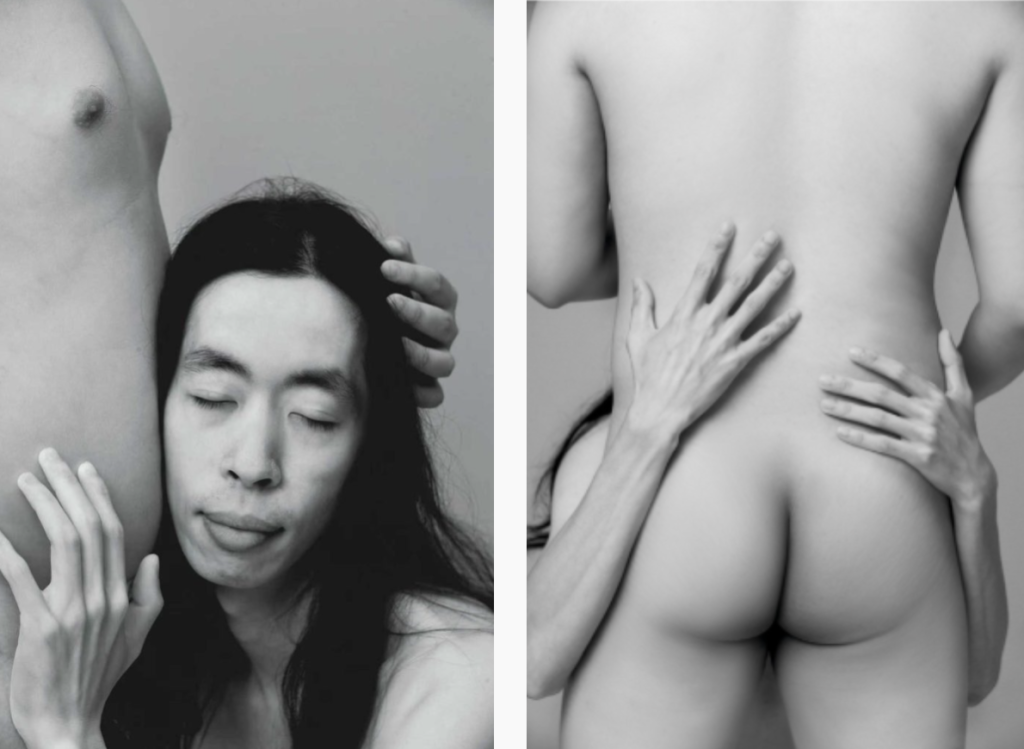
You’re my only destination | 你是我唯一的归宿
Inkjet
21×29.7 cm
2023
Courtesy of the Artist
Lin Zhihao’s work is centered on the iconographic evolution of “Body-History.” Throughout the long trajectory of human history, the body has been more than a physical entity; it is a visual projection of belief and desire. From prehistoric caves where the torso served as an extension of nature, to the pursuit of “divine order” and ideal beauty in Ancient Greece, the body has perpetually carried the weight of an eternal essence.
However, Lin’s work is not a reconstruction of the classical, but an exploration of “how imagery deconstructs the subject.” As Renaissance anatomy peeled back the skin and nineteenth-century photography captured death and motion, the body was stripped of its divinity, relegated to material substance in the mechanical age, and infinitely replicated and symbolized within the torrent of mass media. In this shifting perspective, the once-solid self begins to falter, replaced by a profound reflection on the act of “gazing” itself.
林志豪的作品以“身体-历史”的图象演变为核心。在漫长的人类史中,身体不仅是物质的存在,更是信念与欲望的视觉投射。从史前洞窟中作为自然延伸的躯体,到古希腊时期追求“神圣秩序”的理想美,身体始终承载着某种永恒的本质。
然而,林志豪的作品并非在重塑经典,而是在探讨“图象如何解构主体”。当文艺复兴的解剖学剥开了皮肤,当十九世纪的摄影术捕捉了死亡与运动,身体便从神性中剥离,沦为机械时代的物质材料,并在大众媒体的洪流中被无限复制与符号化。在这种视角的流转中,原本固实的自我开始动摇,取而代之的是对“观看”本身的反思。
In this current creation, he places the physiological male body at the core, embarking on an emotional archaeology of the “male gaze directed at the masculine form.” When gender symbols are stripped away, does a fracture emerge between the pure flesh and subjectivity? This inquiry is not intended to establish a gender binary; rather, it seeks to restore a discursive space for the “human” that precedes the “gendered.”
Through the interweaving of photography and moving images, combined with field research and site-specific intervention, Lin’s practice achieves a depth of engagement with reality. Art is no longer a static representation, but a continuous tracking of the complex interplay between human and environment, individual and identity, and personal agency within power structures.
在这次创作中,他将生理男性身体置于核心,展开了一场关于“男性凝视男性”的情感考古:当性别符号被剥除,纯粹的肉身与主体性之间是否存在裂痕?这种追问并非为了建立性别的对立,而是试图在“性别”之前,还原一个关于“人”的论述空间。
林志豪的创作通过摄影与影像的交织,结合田野调查与现场干预,呈现出一种介入现实的深度:艺术不再是静止的再现,而是对人与环境、个体与身份、个人能动性与权力结构之间复杂博弈的持续追踪。